It happened around 4am. There was still no light in the sky and whatever had fallen from the eucalyptus tree on to the crown of my dome tent was now whimpering in the undergrowth. Mews turned to howls, and then came scuffles and thumps as fern fronds and twigs began to fly. I was in the middle of a possum fight.
I had been asleep less than 10 minutes after spending half an hour shooing away an inquisitive and comically overweight wallaby nibbling at my guy ropes. Its absurd shape had been silhouetted against the canvas by a lamp-bright moon. And two hours before that, my unwelcome alarm clock had been the spine-chilling cry of an insomniac wedge-tailed eagle. At least I think that's what it was.
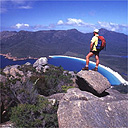
Never had I been so close to untainted nature. Beyond the thin tent wall lay one of the world's last temperate wildernesses. I was on Tasmania's Overland Track, where you can tramp for miles and not see a scrap of litter. Carpets of alpine plants spread down from fierce granite mountain caps to lush valleys jostling with eucalyptus and pine. Stream water is ice-cold and as clear as air.
The Overland Track is the most popular walk in Tasmania yet on the finest spring week in November I saw barely a dozen people each day. The route leaves from near Cradle Mountain in the centre-west of the island and travels south for 50 miles past glacially-formed lakes, through cool, mossy woods, and up over steep ridges of dry scrub bushes inhabited by bright green parrots. It ends up at the southern end of Lake St Clair, and en route, the vegetation changes often. Bare rock turns to stone and sawgrass plains, then grassy meadows and swampy hollows.
Don't believe the guidebooks that tell you Tasmania is more English than England. Giant eucalyptus trees tower over creeks where platypus swim, 10ft tree ferns burst from the undergrowth, tiger snakes lurk in the grass and the woods are full of hopping wildlife. At dawn, Tasmania's temperate rain forests are heady with the scent of lemon, peppermint and myrtle. Branches shower you with fragrant dew as you brush past. This is a long way from England. It's a long way from anywhere.
The Overland Track is only tough going in a few places. A side track up Mount Ossa, at 5,400ft Tasmania's highest peak, is a scramble, and walkers should leave their packs on the main path and take just a water bottle. It pays to take the whole trek with ease (about 10 miles a day and plenty of stops).
Walkers should be fit, however. This is part of a 1.38m hectare World Heritage Area, so everything brought in must be carried out - every match, every used tea bag, and the novels you never read. This can mean heavy packs, as you must take both dry- and wet-weather gear. The weather can change quickly down here at the bottom of the world. My 80F spring week was followed a few weeks later at Christmas by mid-summer snow and the path became invisible in the blizzard.
But the Overland Track is well worth the hardships, for this wilderness is breathtaking. There is nothing vaguely man-made for miles. Often, the only hint of human habitation is a plane's vapour trail as it heads down to Hobart. Another is the occasional wooden walker's hut, a welcome sight at the end of a long day on your feet. They are basic but contain stove, benches, tables and bunks. It's first come first served but there's usually room for all, and if not, there's always an area for tents.
Evening in camp is usually a sober affair, the silence broken only by a gentle rustle of summer leaves and occasional groans drifting from the gloaming as aching calf muscles are eased into dry socks and people heave themselves into sleeping bags. Walkers snatch a few minutes deep wilderness sleep and dream of hot baths and cold beer before the nocturnal orchestra tunes up for another night of cacophony, and possums start dropping from trees.
