
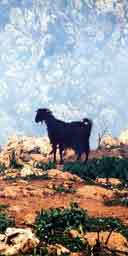
When it comes to overladen donkeys teetering down steep alleys, turquoise seas lapping pebbly, pine-shaded shores and black-clad old ladies sitting in whitewashed doorways, the Greek islands have pretty much cornered the market. Nobody does sun-dried fishermen mending their nets better.
But gourmet cuisine, boutique hotels, stylish shops and a cosmopolitan nightlife? Mmm, not really. Well, you can't have it all.
Or so I thought, until I discovered Chania. Discovered is not really the right word. It seems there are very few people who haven't passed through this city on the north coast of Crete at one time or another. Mentioned in Homer's Odyssey and the Thomson Summer Sun brochure alike, it's one of the oldest continuously inhabited cities in the world. The Minoans, Romans, Byzantines, Venetians, Turks and Germans have all left their mark and in July and August you will find British and Scandinavian tourists discovering it in their thousands. Most are in for the day from one of the nearby beach resorts for a wander around the harbour or maybe to pick up some souvenirs in the souk-like streets of the old town.
But by returning to their resort hotels when the sun sets, they are, quite frankly, missing the point. The capital of Crete until 1971, Chania is a living city which just happens to be on a beautiful Greek island. There may be better beaches elsewhere but few Greek towns can compete with Chania in the looks' department. From the balcony of our hotel, the Porto Veneziano, we could see the peaks of the White Mountains to the left, the glittering Med to the right and a honey-coloured arc of Venetian-built houses in between. It's hard to imagine a more satisfying spot for an off-season mooch around.
Though there are museums to visit (the Byzantine Museum and Archaeological Museum are both worth a look) Chania lends itself best to aimless wandering. On a short stroll through the old town, I passed excavations of Minoan palaces, sixteenth-century Venetian arsenals, wooden Turkish-built houses, elegant mansions with ornate wooden doors and tiny Orthodox churches.
You won't fail to notice that many of the buildings are somewhat lacking in the roof or wall department, thanks to the Germans who bombed the place during their occupation of Crete in the Second World War. Many of these ruined buildings have been restored and converted into guesthouses and studio apartments with high ceilings, shuttered windows and balconies overlooking narrow streets. Others have been left as atmospheric ruins to house al fresco restaurants and bars.
The fourteenth-century Etz Hayyim synagogue has been lovingly restored after it and the island's Jewish community were destroyed in 1944. It has reopened as a house of prayer and meditation for people of all faiths. As I entered the garden, enclosed by the synagogue's pink walls, an elderly man in a skull cap muttered: 'Shalom.' On the noticeboard was a sign advertising Ashtanga Weekend Workshops, just one of several clues to Crete's growing new age following. The island has become a popular spot for yoga holidays and retreats and there is no shortage of shops here selling tie-dye clothes windchimes and incense or vegetarian cafés serving organic fruit smoothies.
There is nothing wholesome or organic, however, about the traffic-clogged streets of Chania once you stray from the old town. Buzzing with mopeds, shoppers and workers, the modern part of the town seems hot, noisy, Greek and real after the almost surreal prettiness of the harbour area.
If you want to shop where the locals shop, head for the Agora, a covered market where you can treat yourself to a whole piglet, a huge ball of feta cheese or some squid soup. It's also a good place to buy herbs and olive oil. Perk yourself up with a cup of strong coffee in the square outside before following your nose to Tsoudheron, a street devoted to leather shops selling bags, belts and wallets.
Whatever you do, make sure you are back on the harbourfront by sunset, when the pastel- painted townhouses turn pink and the owners of the waterfront cafés light candles and the Venetian cobb and minaret lighthouse are silhouetted against the orange sky. It could almost - almost - be St Tropez, if it weren't for the absence of glitzy yachts, beautiful people and inflated prices.
It's about this time of day, when the daytrippers have scuttled back to their resorts and the harbour lights twinkle on, that you start to feel smug about choosing to stay in Chania. For the best is yet to come. Even the most hardened Grecophile is occasionally forced to admit that the culinary options of their favourite Greek resort can be somewhat limited. Not so in Chania. In a typical day, you could start with a breakfast of sweet pastries at a traditional kafenion , have mouthwatering kebabs and freshly made pitta bread at a converted Turkish bath-house (Tamam on Zambeliu street), before dining on rabbit cooked in wine in the ruins of a fourteenth-century Venetian mansion (Anaplous on Sifaka).
And the nightlife's not bad either. In one gloriously silly night, we started with cocktails by candlelight in Synagogi, a bombed- out synagogue in the old town, before descending the steps into Nota Bene, a popular tourist dive where the staff wear fireman's helmets and set fire to the bar every hour on the hour (not a place for a quiet drink). A quick mojito in salsa bar Tipogra fon (where a Japanese drumming troop were due to perform later that week) and it was time to hang out with the Hell's Angels (well, two blokes from Southampton who had given themselves second-degree burns by driving across Crete on mopeds wearing just swimming trunks) in the heavy-metal Scorpio Club, which isn't as scary as it sounds.
If this all seems like way too much fun, you can always spoil it by getting up at 5am and attempting to walk the Samaria Gorge in a pair of flip-flops, as a surprising number of tourists do. We saw them hobbling down to breakfast the next day, smiling bravely. Luckily, our rep, Frankie, had talked us out of doing the 11 mile gorge walk.
Instead, we hired a car and ventured up and down the coast stopping for a swim at beaches which took our fancy, eating calamari at beachside tavernas, and following mountain roads. It was good to feel some sand between our toes but at the end of the day it felt equally good to get back in the car and head for the bright lights of Chania knowing that a decent café latte was only a half-hour drive away.
Factfile
Joanne O'Connor travelled with Sunvil Holidays (020 8568 4499) and stayed at the Porto Veneziano Hotel which has 51 rooms with balconies overlooking the harbour. A week's B&B at the hotel in low season costs from £537 per person including flights and based on two sharing. In the Old Town, Sunvil also offers studio apartments in Casa Veneta, an old Venetian house, with prices from £443 per person.
