
In the middle of the 20th century, Chicago absorbed one of the most significant mass movements of people in US history: the "Great Migration" of African-Americans from southern fields to northern tenements. This exodus wrenched the blues from its cradle, the Mississippi Delta, and hurled it into the chaos of black Chicago.
Chicago is still America's first city of blues. From the most sophisticated North Side clubs, where visitors clap politely, to the roughest South Side juke-joints, where drinking, dancing and fighting are enjoyed in that order, guitars and harmonicas still wail in the Windy City night after night.
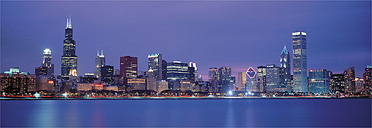
Before launching into a blues bar crawl in Chicago, however, you should understand the differences between the city's downtown and North, South and West Sides. The central area of downtown Chicago - labelled "the Loop" - is defined by the circuit made by the elevated metro. You'll find some of the best clubs in town here and, after dark, the area grows enjoyably boisterous.
For the purposes of this guide, at least, the North Side includes all suburbs immediately north of the Loop. A largely white and well-heeled part of town, North Side blues bars are mostly tourist-friendly and safe. You'll find some of the best bands in Chicago here, but hardcore fans might find the experience to be a tad sanitised.
The South Side - all the suburbs south of the Loop - comprises the black ghetto where blues was pioneered in Chicago. There are a number of good, safe clubs on the South Side but if you're easily scared, you might be put off by nightly news reports of guns and drugs. You'll find the best raw blues played in the rowdy, smoke-filled clubs that populate this part of the city but, if you don't know where you're going, you might also find trouble.
The West Side, like the South, has more than its fair share of problems. There are fewer good clubs here but some are worth visiting. If you do decide to head south or west, you should drive to the door and leave before the end of the set. All venues listed in this guide are generally safe but it doesn't hurt to be cautious.
Downtown and the Loop
Buddy Guy's Legends
754 South Wabash (tel: 312-427 0333).
Wedged between the South Side and the Loop, Buddy Guy's Legends is the best-known club in Chicago thanks to the fame of its owner. Louisiana-born Buddy Guy began his Chicago career playing what would later be styled "West Side Blues" with Magic Sam and Junior Wells. He is one of the most successful figures in modern blues and a guitar master. Guy himself seldom plays his own club but the schedule usually includes the best of local and visiting talent and, if you're lucky, you'll at least glimpse Guy parading around his slick and spacious club.
Koko Taylor's Celebrity
1233 South Wabash (tel: 312-360 1558).
Not far from Buddy Guy's Legends, Chicago's own "Queen of Blues" has recently opened a venue. Koko Taylor was born near Memphis in 1935 and moved to Chicago at a young age. Her 1966 version of Willie Dixon's Wang Dang Doodle made her a big star and she's still one of the bestsellers on the Chicago-based Alligator label. Like Buddy Guy, she rarely plays her own venue, preferring instead to maintain a punishing tour schedule. The club itself has gained a reputation for presenting some of the best in Chicago blues. It doesn't look much from the outside but it's a snug and friendly venue.
Blue Chicago
536 and 736 North Clark (tel: 312-642 6261).
Two nearby clubs with one cover charge, both Blue Chicago venues are moody, atmospheric places which make a convincing attempt to evoke the cool of blues. Blue Chicago has made a special feature of its female vocalists.
House of Blues
329 North Dearborn (tel: 312-923 2000).
All the effort and expense that has gone in to presenting this caricature of a blues club - one of a chain - seems slightly superfluous when the real thing is available just a few miles to the south. The management do book some good musicians, however, and it is a guaranteed "fun night out" in much the same way as a trip to Planet Hollywood can be.
North Side
B.L.U.E.S.
2519 North Halsted (tel: 773-528 1012).
This leading North Side blues club has presented some of the greatest names in Chicago blues, from Sunnyland Slim to Pinetop Perkins, since it opened in the late 1970s. Top acts still appear regularly and passing stars can be relied upon to drop in for jam sessions. The lively crowd and tiny stage make this one of the most enjoyable clubs in town.
B.L.U.E.S. Etcetera
1124 West Belmont (tel: 773-525 8989).
The success of B.L.U.E.S. spawned this bigger, brighter cousin which is used for acts such as Otis Rush and Magic Slim, who attract far larger audiences than the original club can handle.
Kingston Mines
2548 North Halsted (tel: 773-477 4646).
Cavernous place with two rooms, each with its own stage. The stages are used alternately so one room is always music-free. With a licence till 4am, Kingston Mines attracts an uneasy mix of blues lovers and hardcore drinkers, but it deserves its reputation for great music.
Hideout Inn
1354 West Wabansia (tel: 773-227 4433).
Buried in an industrial part of town, the 1934 Hideout remained almost unknown for years. New owners have attracted a growing audience with an eclectic range of blues, folk and rock bands.
Green Mill
4802 North Broadway (tel: 773-878 5552).
Not strictly a blues bar, the Green Mill is more likely to present jazz or 1950s- style rock 'n' roll. It has been included in this guide because it is modern Chicago's best taste of 1930s elegance and the Al Capone era. The Green Mill was one of Capone's preferred haunts and it has maintained the extravagant appearance and heady atmosphere of an illegal speakeasy.
South and West Sides
Checkerboard Lounge
423 East 43rd (tel: 773-624 3240).
With the aesthetics of a low-down juke-joint but a track record for safety, the Checkerboard is a popular club among visitors who want to venture into the South Side. Good live music blasts into the small hours every weekend, and next door there's Alma's Soul Food.
Lee's Unleaded Blues
7401 South Chicago (tel: 773-495 3477)
Another near-legendary South Side venue, the dim, red-lit interior oozes 1970s Americana. The fake stone slabs on the outside of the building are an interesting design flourish, too. Appearance aside, Lee's Unleaded guarantees polished blues and R&B acts every weekend.
Gerri's Palm Tavern
446 East 47th (tel: 773-373 6292).
Opened in 1933, Gerri's is something of a music landmark. Some of the brightest stars of the classic jazz era hung out here, although these days the place has crossed over from jazz to blues.
Rosa's
3420 West Armitage (tel: 312 342 0452).
With some of Chicago's best blues musicians performing here Tuesdays to Sundays and a history worthy of a soap opera, Rosa's is an instantly likeable club and one of the very few venues on the West Side where visitors can feel at ease. David "Honeyboy" Edwards, an original Delta bluesman and contemporary of Robert Johnson, plays here often.
Maxwell Street
Just a short way south of the Loop before 14th Street, Maxwell Street is not a blues club but it is one of the most significant blues landmarks in Chicago and a venue of sorts. From the 1940s to the 1970s, Maxwell Street was the commercial hub of the black community and a lively strip of African-American businesses and market stalls. Almost all the great Chicago bluesmen got started busking on Maxwell Street and the Sunday market became a key arena in which to make one's name. Today the market is held on nearby Canal Street, and up-and-coming blues bands still line the street to entertain the market crowds.
Pilgrim Baptist Church
3301 Indiana.
Modern gospel music was perfected here by musical director Tom Dorsey - a well-known and bawdy blues musician before "seeing the light" - and New Orleans-singer Mahalia Jackson. The overwhelming talent of the pair shaped gospel music and made the church an important chapter in the story of American music. Today, the church still enjoys an exuberant congregation and the gospel music performed here in praise is outstanding. Visitors are welcome, but be prepared for very long services.
Way to go
Getting there: Richard Knight runs Roots of Rhythm Travel (01892 511894, rootsofrhythm.com) which offers tailor-made fly-drive blues tours of the US, including Chicago. The Roots of Blues 14-night tour includes New Orleans, the Delta, Memphis, St Louis and Chicago and starts from £1,275pp, inc flights.
Further information:
Chicago Illinois Tourist Board: tel 01372 726928, enjoyillinois.com.
Flight time to Chicago: 8 hours and 45 minutes.
Time difference: GMT -6 hrs.
Dialling code: 001 312/001 773.
Richard Knight is the author of The Blues Highway: New Orleans to Chicago (£12.99), published by Trailblazer Publications, available in bookshops and from blues-highway.com.
