
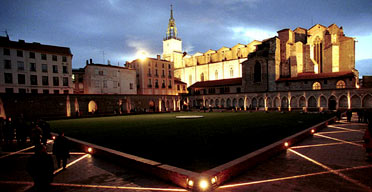
It's not surprising that Perpignan doesn't feature on the quintessential tick-list for long weekend destinations. For a start, it is squirreled away in Roussillon, the southern-most corner of France, a district that is so busy producing table wine that it has little time to up its ratings on the tourism clap-o-meter.
Salvador Dalí once referred to Perpignan station as "the centre of the world", which is to say the least "surrealistic" as celebrity endorsements go. Add to that the town's inherent identity confusion and a reputation for being a gateway to finer things, and Perpignan is way down the pecking order.
More fool us. While we have an online bun fight for price-hiked flights to the Côte d'Azur, the spectacular 150-mile stretch along the Côte Vermeille, lies perfectly, peacefully empty. Set slightly back from the coast and within hacking distance of the wild foothills of the Pyrenees, understated Perpignan waits patiently. In one of Ryanair's fits of generosity I took the bait and booked a free return flight.
If you arrive expecting a typical French city, you'll be surprised. Not only is it within smuggling distance of the Spanish border, it is also on the road that links the straits of Gibraltar to the Italian peninsula - the Roman Via Domitia (or, less romantically, the A9).
Like every border or crossroad town, there is a mishmash of culture. Order a bottle of vin de table and it arrives with a plate of tapas. Turn up during the summer and red-and-yellow bunting is draped across balconies, with occasional splashes of white and blue. Listen carefully to gossip in the boulangerie, and you're bound to hear Catalan embellishments. It can't seem to make up its mind, but what Perpignan knows for sure is it's Catalan first; French second.
The city is also more cosmopolitan than you might expect. In the old centre, which is mercifully pedestrianised, elegant arcades and palm-lined squares open on to each other. The Place de la Loge boasts a pink marble pavement while rue de l'Ange is lined with smart boutiques and cafes, such as the Paradis Fouillis, a bijous salon de thé. Boutique 66 (Perpignan is the capital of department 66, the Pyrenees-Orientales; at 14 rue Foch) is a chic new shop for clothes and accessories, and rue des 3 Journées is the place to find Catalan inspired decoration, fashion, and children's boutiques.
Among the hotchpotch culture, there is thankfully no confusion over what to do at midday. Eating and drinking al fresco is obligatory, and there is a great variety of places to chow down. By far the best menu du midi is at L'Arago brasserie (1 Place Arago, +4 6851 8196, from €15 for three courses).
After a hearty feed, it is a five-minute stroll to the Palace of the Kings of Majorca. Built in the 13th century and once the court of the kings of Aragon, it now has an eerily empty moat and fantastic views over the town. As French towns go, it isn't postcard material, but there's plenty of history among the churches, monuments and museums, all marked by comprehensive histoire de la cité boards.
Personally, I just wanted to check in. An inconspicuous blue door in a small terraced street conceals the Croque la Lune B&B. It formed part of the crumbling remains of an old convent until 2003 when a Belgian couple, Ruby and Amelie, moved in and renovated it. Breakfast on the garden terrace under bougainvillea and oleander is a feast of croissants and conversation. The room in the roof has a totally secluded terrace with a massive rattan sofa, perfect for catching a siesta. You wouldn't get that in Paris for €75.
Les Trois Soeurs on Place Gambetta is a good place to kick-off the evening. Through the Gauloises haze a distinctly trendy crowd mill around, knocking back mojitos. In the summer, patrons of various bars spill out on to the street and merge into a collective soiree. Le Républic Café is the place for live music, though on Thursdays in summer, bands and street entertainers perform around the town anyway (July 7-August 18, until 11.30pm, free).
Another place for atmosphere is Le Habana Club (5 rue Grande-des-Fabriques), a Cuban bar and restaurant with an extensive cocktail list. Over the road, le VIP (+4 6851 0230, 4 rue Grande des Fabriques, set menu €23), is a sophisticated and intimate restaurant serving unusual Mediterranean cuisine and spicy Catalan dishes.
The nearest beach, Canet-Plage (10 minutes out of town on bus number 1), is a swathe of white sand, popular with families. An afternoon spent sipping rosé over a three-course lunch at La Fontaine de Klervie (Promenade de la Côte Vermeille), will set you back €20.
Just north of the Spanish border, the former fishing village of Collioure is what St Tropez must have been like before the yachts arrived. A cat's cradle of cobbled streets punctuated by galleries and cafes - not to mention a splendid castle - set the tone. Henri Matisse lived and painted here, and famously said: "In the whole of France there is no sky as blue as the one above Collioure." These words drew Pablo Picasso, Dalí, Raoul Dufy, and Andre Derain here, and it became the unlikely birthplace of the colour-rich Fauvist movement. Today, local artists tend to be of the handmade shell-mirror movement, but its charm is still intact.
Mopping up the last splashes of lobster bisque before my taxi arrived, I realised it's not always the obvious places that end up scratching their initials on your passport. In France, as in life, the quietest ones often have the most to say.
Way to go
Getting there: Ryanair (0906 270 5656, ryanair.com) flies Perpignan-Stansted daily from £7.99 plus tax.
Where to stay: Croque la Lune (+4 6834 1739, croquelalune.com), offers double rooms from €60-€75 B&B, minimum two nights July-September.
Further Information: Maison de la France (0906 8244123, www.franceguide.com). Perpignan Tourism (+ 4 6866 3030, perpignantourisme.com). Collioure tourist office (+ 4 6882 1547; collioure.com).
Country code: 00 33.
Flight time London-Perpignan: 2hrs.
Time difference: +1hr.
£1 = 1.42 euros.
