
It's not that I demand the lap of luxury, but I do have two basic requirements for a holiday - a decent shower and a reasonably comfortable bed. So I've missed out on the whole backpacking/inter-railing experience, have only ever been an intermittent festival goer and have certainly never considered camping. The appeal of sleeping in a field evaporated for me at the age of about 12 when I realised that not being able to wash your hair for days and weeing in a bucket were not the things that made me happy.
Twenty years later, I am the mother of a small boy who finds few things more exciting than the idea of sleeping in a field, so the prospect of a holiday that would give him all the fun of the outdoors while allowing me to enjoy proper beds and plumbing seemed like a miracle sent by a benign deity.
In fact, Featherdown Farm holidays are the idea of Luite Moraal, the man who brought Center Parcs to the UK in the 1980s and clearly had an astute grasp of the difficulty of keeping children entertained on holiday in more imaginative ways than stuffing them with candy floss and wedging them into a dodgem. The farm holidays have been running successfully in Holland and the first one in Britain has just opened at Manor Farm, near Alton in Hampshire. The ethos is straightforward - the holidays are run on small, working farms where the farmer is striving to protect, and work in harmony with, the countryside.
As far as possible, guests are encouraged to buy all their food from the farm shop, which will be supporting local producers. Above all, it's a chance to get back to nature, ditch all the props of our modern support system and live, as the brochure rather mawkishly puts it, 'the honest rural life of yesteryear'. It's a chance for families to spend time on wholesome outdoor pursuits and actually talk to one another, undistracted by PlayStations or emails. As a concept, it sounded idyllic, but secretly I wondered if Paddy and I would survive three days thrown wholly on our own resources.
I deliberated for quite some time about whether to sneak in my iPod and in the end decided I could manage three days without Rufus Wainwright. But what about a radio? Because I would need to hear the news, I thought, and then I thought, well, would I? There would only be more global misery and what was I going to do about it in the middle of a field in Hampshire? If we were going to retreat to a pastoral idyll, we might as well do it without the Today programme. So I left the radio behind as well and decided that we would attempt to live in the moment. Instead, we packed a bag full of books and drawing equipment for the evenings.
We arrived at Manor Farm on the Friday evening to be greeted by Will Brock, the farmer, and his wife Anna, who runs her own business, Anna's Kitchen, making ready meals from the farm's meat and produce. With our box of chopped wood and two frozen hot water bottles, we made our way to the tent to get started.
I say 'tent' - these sophisticated wood and canvas structures are to tents what the Four Seasons is to a seaside B&B. The central unit offers a sink with cold running water and is stocked with all the cooking utensils, enamel cups and plates and cutlery you will need, while above it is an iron hook for suspending the paraffin lamps you light at dusk. An antique coffee grinder hangs on the wall. In the centre of the tent is a wood-burning stove which warms the room and on which you do all your cooking.
At the back is a compartment with a proper flushing lavatory made to look like a Victorian wooden bench, and two bedroom sections, one with a large double and one with bunk cabin beds, supplied with warm, comfy duvets and pillows; best of all for small people, there's a secret canopy bed hidden inside a cupboard. Hot showers can be had in a block across the farmyard. Inside the tent you also get a cool chest in which you place the frozen water bottles (it doesn't do much for ice cream, but it kept milk and juice fresh for a couple of days) and a sturdy dining table overhung with candle holders. There are little hearts carved into the wood of the doors, so the overall effect manages to be authentically rustic and ever so slightly twee.
In the brochure, it sounds straightforward: 'First you need to fill the stove with wood. Soon there's a cosy fire flickering behind the stove window.' Just like that. No there bloody isn't, to whoever wrote that copy. Of course, you get a detailed instruction sheet, but I was too excited to bother reading that. Besides, how hard could it be to make wood burn? Quite hard, it turns out. I got the kindling going with the firelighters, but couldn't get the big logs to catch; poking them seemed to help but only in the short term. Paddy stood behind me, arms folded, sadly shaking his head. 'It's your fault, mummy, it's going out because you keep fiddling with it,' he said. 'Oh, right, because you're four-and-a-half and you know all about lighting fires.' An argument, already! This didn't happen in the brochure! Where was the warm companionship and serenity of yesteryear? Paddy looked at me pityingly. 'Grandad would know how to do it,' he said and wandered off to visit the sheep.
I stuck my head out of the tent and looked around. The chimneys of the other four tents were chuffing away like a merry Hobbit village; ours was coughing like a tramp on a park bench. I wondered if firelighting was a gender-specific skill. During that mysterious interlude at school when they took us all off to learn about Tampax, were the boys being secretly being taught how to light a wood stove? (Turns out not; the following morning the tent next door, which had two male inhabitants, set off their smoke alarm while failing to light the stove. Ha! Still, it was encouraging to know the alarms worked so efficiently - all that wood, canvas and naked flame looked like an arsonist's dream.) So I poked at the fire and shouted at it with some traditional Anglo-Saxon cursing that would have been familiar to the yeomen of yesteryear, then gave up on the smouldering embers and went off to play with Paddy on the rope swing hanging from the apple tree in the syrupy evening sunlight.
When we came back to the tent, the fire had miraculously lit itself and we were able to cook dinner and eat it at the picnic table outside in the last of the sunlight as we watched all the chickens come home to roost (for once in my life, not a metaphor). Afterwards we lit the candles and the lamps; looking out across the field, we could see warm, friendly lights through the windows of the other tents, far enough apart to feel private, but near enough to give a sense of community. The effect was completely charming. After Paddy went to bed, I read for a while by candlelight, but went to bed earlier than I have in years.
I'm not sure which woke me first, the shrieking rooster or Paddy leaping up and down on my legs shouting 'Let's see if the hens have laid any fresh eggs!' Guests are welcome to help themselves to any eggs laid overnight, so we put on wellies and made our way 20 paces across the grass to the henhouse. As I tentatively pulled open the door, the entire flock bolted past as if they'd been piled up waiting and scattered across the field and I realised that I probably should have opened the door on the enclosure side, not the field side of the hut. Now all the chickens were running about, some heading for the gate towards the lane, and I panicked - our first morning, and already I had let their chickens escape, probably to certain death on the roads.
I wondered how expensive it would be to replace a flock of chickens, as Paddy tried unsuccessfully to herd them back towards the enclosure. It was hopeless - there were too many and they were too intoxicated with their freedom. They laughed in our faces. We ran to find the farmer to apologise for probably ruining their livelihood, and he patiently explained that the hens were free range. They were supposed to wander about the field; besides, he said, they can fly. Oh yes, I said, feeling like Withnail.
Returning, relieved, to the henhouse, we found one patient chicken sitting on top of three warm eggs; Paddy carefully gathered one and cradled it back to the tent while I lit the stove with no less incompetence than the night before and eventually we cooked the egg for breakfast. 'I think that's the freshest egg in the world,' Paddy said, with as much satisfaction as if it was all his own doing. Then, after a small pause: 'Did it come out of the hen's bottom? Like a poo?' I had to confess that I didn't entirely know the answer.
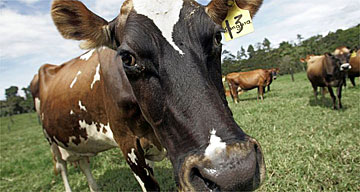
We picked blackberries along the lanes by the fields, Paddy helped Will to feed the sheep and the llamas (yes, llamas - they chase away foxes), which he seemed to think were called 'alarmers' - quite aptly, since the three of them were quite a terrifying sight as they came galloping over the crest of the hill.
In the evening, Will lit the large wood-fired bread oven in the corner of the field to roast chickens (not, fortunately, the ones we'd been chasing). This created a nice communal atmosphere; most of the other tents had opted for a chicken, and we all sat about on the grass drinking wine and chatting while the children played among the trees and we waited for the oven to heat, the burning embers to be scraped out and the chickens and jacket potatoes to cook.
My parents, who live locally, came to visit. My father took one look at the stove and said: 'You've laid that completely the wrong way around.' Once he'd explained, with that particular I'll-always-know-better tone exclusive to fathers of adult children, that you don't put the big logs on until you've built up the heat with the smaller wood, the fire seemed almost as effortless as switching on the oven.
Over dinner, my parents, both of whom grew up in working-class homes during the war, shared nostalgic memories of oil lamps and candlelight, outdoor lavatories and bathwater heated over the fire. My mother had lived in a house with no electricity for most of her childhood; what for Paddy and me was an exotic holiday in the past was part of her living memory, and it amused her to think of middle-class people paying money to experience a facsimile of a life that had been a considerable hardship.
Knowing that it was only for a few days, though, I loved it. It took a full 36 hours for Paddy to say, 'I wish we had our computer' and, although I was occasionally itching to check my emails, I didn't miss the TV or the phone. As a caveat, though, I have to say that we were extremely lucky with the weather; on sunny, warm days, the English countryside has many delights to offer, and the farms all provide rental bikes on which to explore.
Had we been stuck in the tent in pouring rain, its appeal might have worn thin very quickly. For parents who are not practical or masochistic enough to attempt the full camping experience but want to fling their kids around in the great outdoors, the set-up is ideal and, although it seems geared towards families, there was a real mix of young couples, older couples and parents with children. Everyone, it seems, has a secret desire to get back to nature - but only temporarily.
Essentials
The Featherdown Farm at Manor Farm in West Worldham in Hampshire is open between March and October. A stay starts at £185 for a four-night midweek break, £195 for a three-night weekend break and £315 for a week, with a £15 booking fee and linen at £5.75pp. More details on 01420 80804, www.featherdownfarm.co.uk. More farms will join the Featherdown Farm programme in 2007.
Five more ways of getting back to nature
· Children have no excuse to stay indoors at the Highland Cottage (01664 840 213; www.isleofcarna.co.uk) on the Island of Carna in the middle of Loch Sunart in the western Scottish Highlands: there's no phone or electricity. But the heather-covered peaks, beaches and flower-filled meadows offer lots of space and, as there are no roads, they'll be totally safe. There's a boat, and seals and red deer to watch. The eight-person cottage costs £675 a week, or £250 for three nights.
· A small family farm, Niome Kusegard near Visby in Gotland, Sweden, (00 46 498 273 368; www.niome-kusegard.com) runs a breeding prgramme for protected species of Nordic farm animals. Your stay will support it, but you don't have to muck in with farmyard duties unless you want to. Guests may be content with collecting eggs, helping themselves to the garden's berries and fruit, walking in the nature reserve or lying on the nearby beaches at Ire. From £292 per week.
· For 'frontier-style' living, a stay in the Peace of Selby Wilderness (00 1 907 672 3206; www.alaskawilderness.net) lodge in Alaska's 8 million-acre Gates of the Arctic National Park. Go canoeing, fishing, birdwatching and spotting the area's resident grizzly and black bears, moose, caribou and wolves. Guests can stay in the main lodge, for $500 pp (£266) a night or in a remote log cabin, where they'll have to bring or catch their own dinner, for £133 pp a night.
· Deep in the Italian Abruzzo mountains, the medieval village of Santo Stefano di Sessanio, once abandoned, has been restored by the Sextantio hotel (00 39 0854 972 324; www.sextantio.it) using traditional handicrafts and antique furniture. The food and the entertainment are medieval. Doubles from £105.
· While walking through the Couserans area of the Spanish Pyrenees, you learn about the wildlife, taste food at organic farms, visit sorbet and jam producers and a cheese factory, feast with shepherds or join in with local celebrations. The week-long walking holidays, staying in a 200-year-old mansion, cost about £560 a week with Jonathans Tours (00 33 561 046 447; www.jonathanstours.com).
