
1. Research your destination before departure
Spend some time researching your destination before departure. A little preparation is all it takes to avoid turning up at a place the day after a weekly market or annual festival and being told how wonderful it was.
2. Know your equipment
Ensure you’re completely comfortable with your kit. Many photo opportunities don’t repeat themselves and missing the moment because you’re trying to figure out how the camera works is frustrating and avoidable.
3. Frame the subject
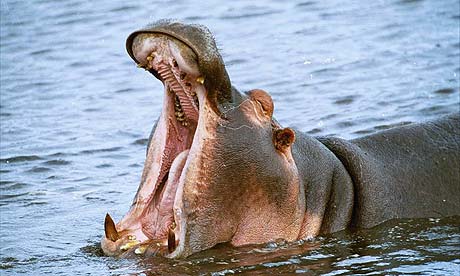
Fill the frame with your subject so that there is no doubt in the viewer’s mind what the picture is about. If you have to explain that the grey blob is an elephant then the picture has failed.
4. Think about composition
There is no one perfect composition for any given subject. However, if in doubt start with the rule of thirds that teaches that the main elements of a composition should be placed at points one-third of the way from the sides of the frame.
5. Horizontal or landscape?
Consider whether the subject would look best photographed horizontally or vertically. Camera orientation is an easy and effective compositional tool.
6. Consider your viewpoint
Don’t assume that your eye level or the first place you see your subject from is the best viewpoint. Taking a few steps left or right, going down on one knee or standing on a step can make a significant difference.
7. Check the background
Look at the space around and behind your subject and make sure nothing overpowers it in colour, shape or size.
8. Make sure eyes are in focus
Focus on the eyes when photographing people or wildlife. It doesn’t matter if other features are out of focus: if the eyes aren’t sharp the image will fail.
9. Check the horizon
When photographing landscapes keep horizons straight.
10. Lighting matters
The colour, quality and direction of light change throughout the day. Note how the light is falling on your subject and select a viewpoint that makes the most of these elements of natural light to enhance your subject. This can sometimes mean having to wait or return at another time.
• Richard I’Anson is the international manager of Lonely Planet Images and is author of Travel Photography: A Guide to Taking Better Pictures (Lonely Planet, currently reduced to £8.79).
