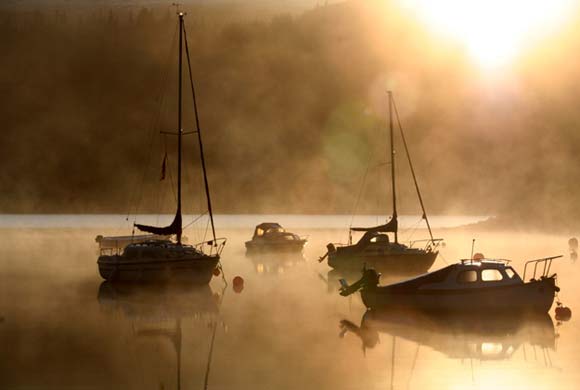
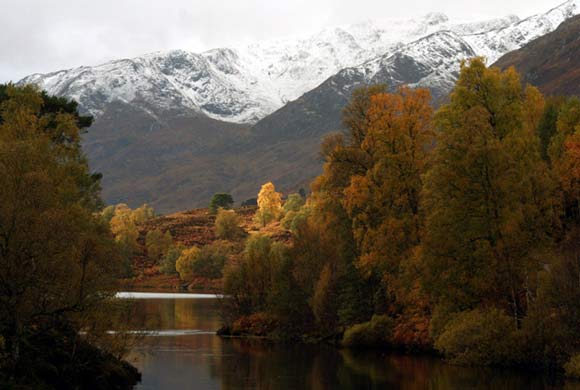
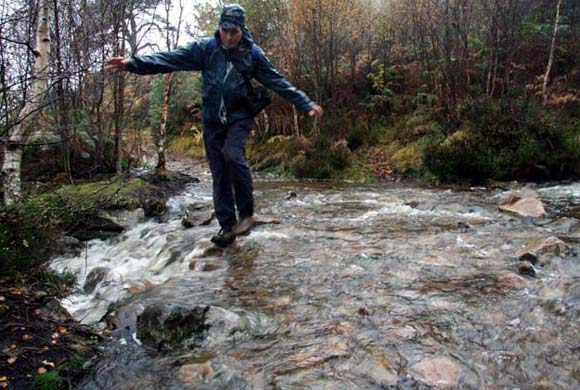
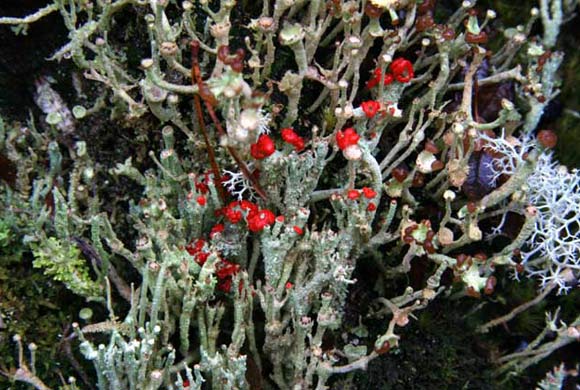
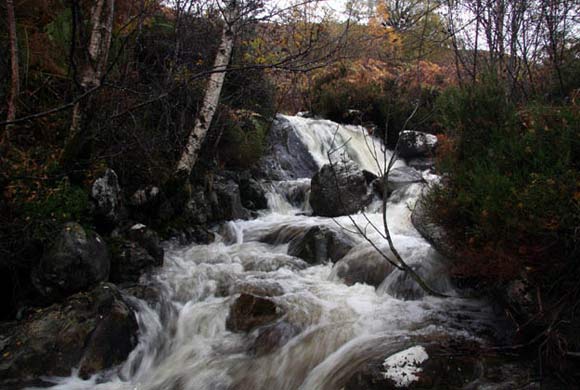
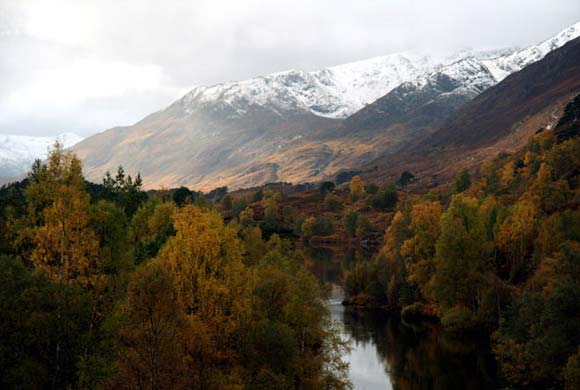
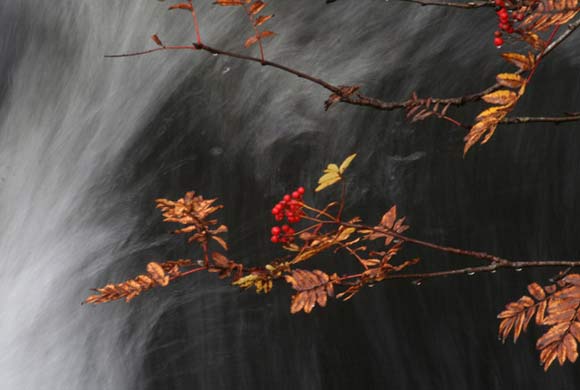
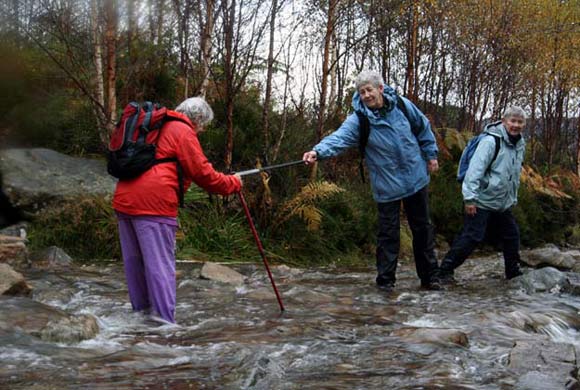
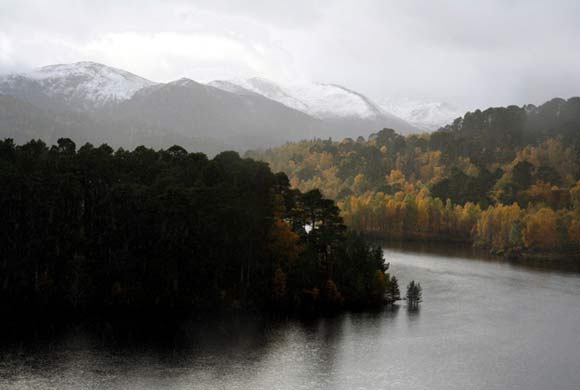
Loch Ness at dawn. The area around the loch is home to some of the last vestiges of old Caledonian forest. Of this vast area of woodland, established after the last Ice Age 8,000 years ago, little now remains Photograph: Kevin RushbyGlen Affric near Loch Ness holds some of Scotland’s most beautiful forest with patches of ancient native woodland mixed in with plantations. The charity Trees For Life and landowners are working to regenerate a forest that will stretch right across ScotlandPhotograph: Kevin RushbyWalkers can use established coast-to-coast routes through Glen Affric. Inverness to Glenelg, for example, is around 80 miles. It will be 100 years before the route is entirely forested with large trees, but it is already one of Scotland’s most scenic trailsPhotograph: Kevin RushbyThe forest is rich in lichens, small plants that are made up of a fungus and an alga working in unison. Alongside blaeberries, cowberries, heathers and mosses, they make the forest floor a colourfully diverse environment Photograph: Kevin RushbyAlthough presented as a wilderness, Glen Affric has been shaped by its human inhabitants and visitors. Before the Highland Clearances, the Chisholm Clan lived here. Many went to the United States where the famous Chisholm Trail was named after Jesse Chisholm, son of a Scottish emigre and a Cherokee womanPhotograph: Kevin RushbyExperts disagree on the past extent of the Caledonian forest. However, the area of native woodland certainly declined over the centuries. In 1773, when Dr Johnson lost his walking stick on a tour of the Highlands, he quipped to Boswell, “Consider, Sir, the value of such a piece of timber here.”Photograph: Kevin RushbyA rowan overhangs the waters of the River Affric. The forest mainly consists of birch and Scots Pine with some aspen and mountain ash. If grazing by sheep and deer is controlled, the forest is quick to re-establish itself Photograph: Kevin RushbyWalkers have several paths and car parks to use in Glen Affric. Accommodation, however, is limited. A remote and unstaffed Youth Hostel exists at Allt Beithe in the upper glen. Wild camping is possible and there is also a mountain bothyPhotograph: Kevin RushbyWhen the forest is fully established from coast to coast, some experts believe certain species should be reintroduced. Wild boar, for example, eat bracken roots and in the process help bury Scots Pine seeds. In 2009 trials will begin to see if the beaver can be brought backPhotograph: Kevin Rushby