Luca Isola, an Italian, moved to Shanghai in 2004, and now calls the megacity of 25 million people home. His photographs document the city's daily life, capturing the everyday as well as the extraordinary
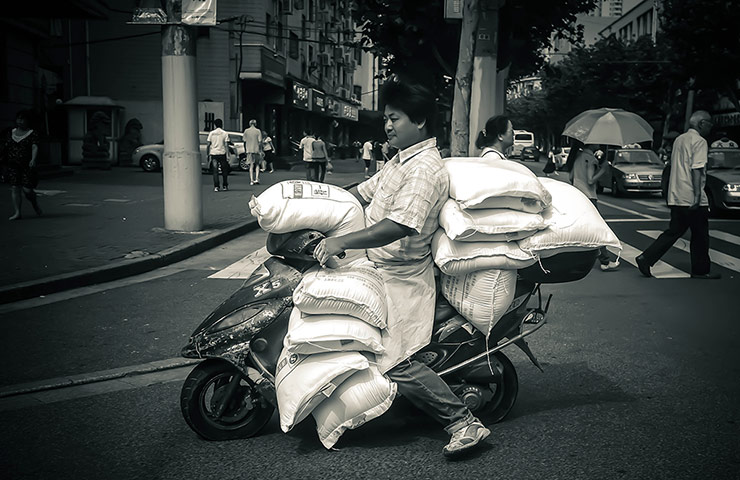
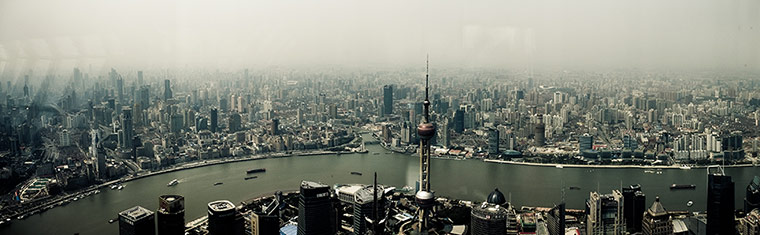
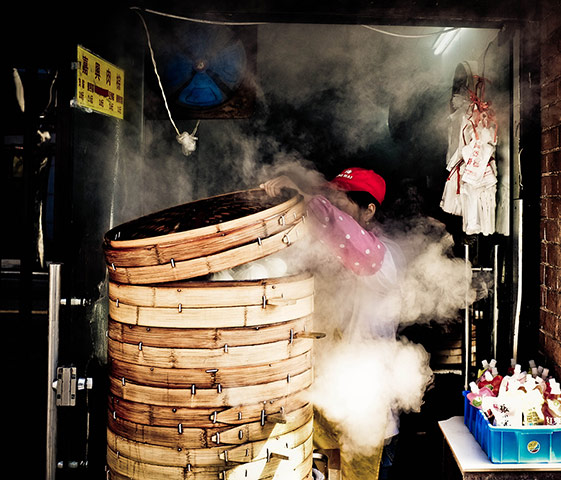
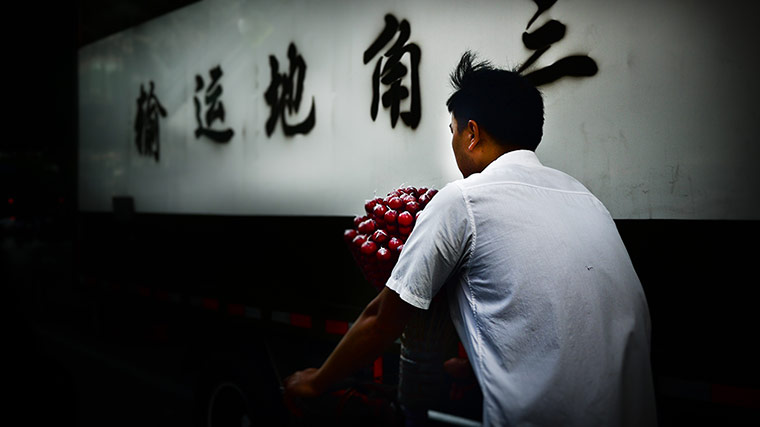
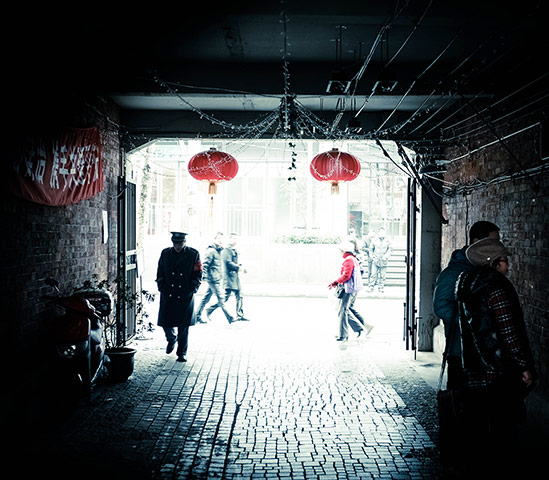
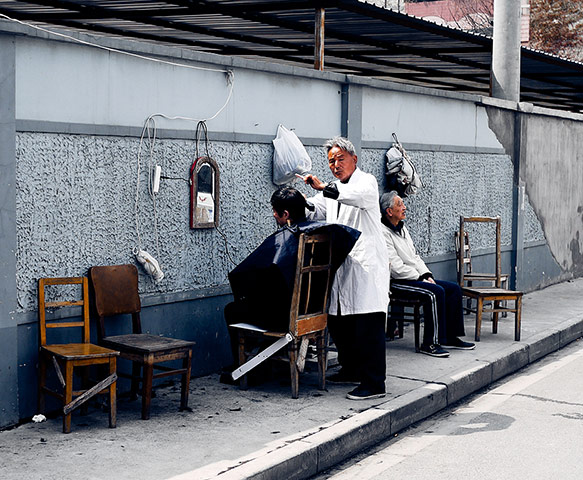
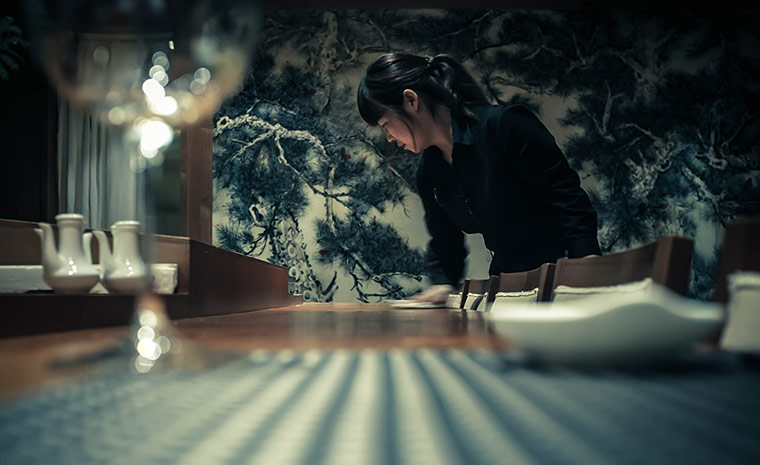
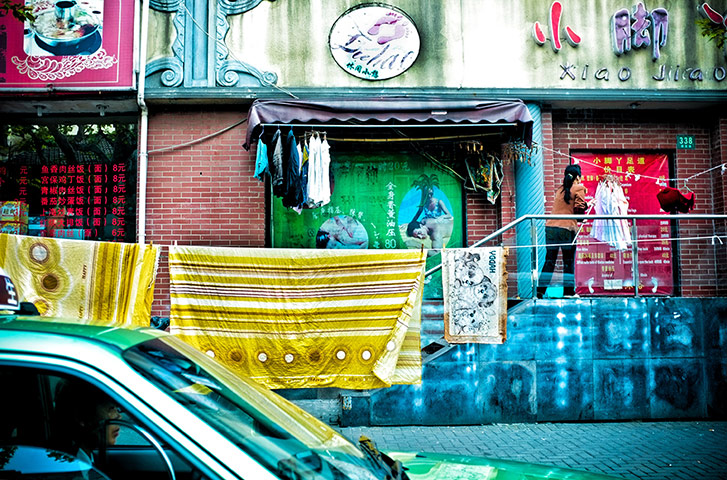
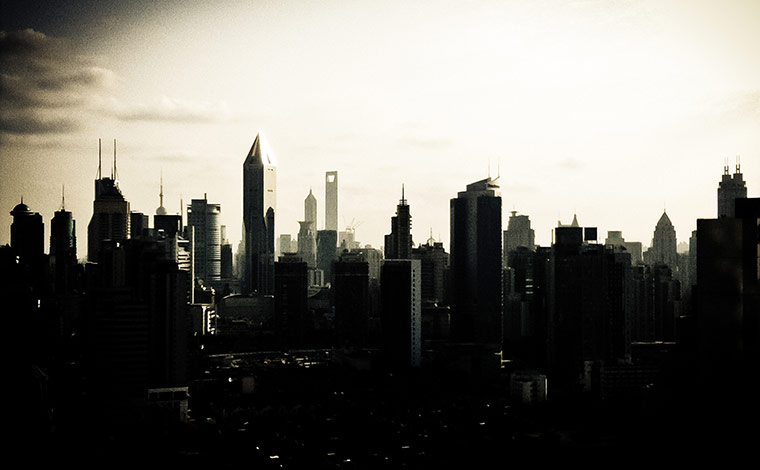
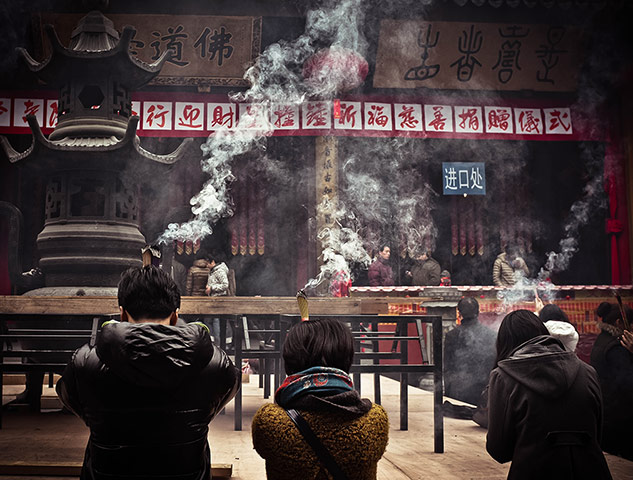
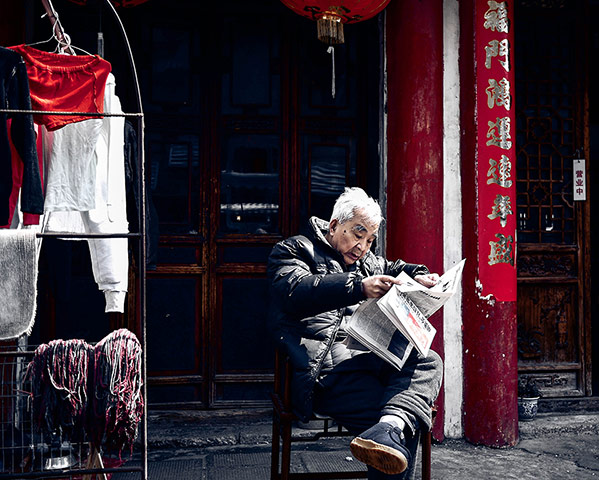
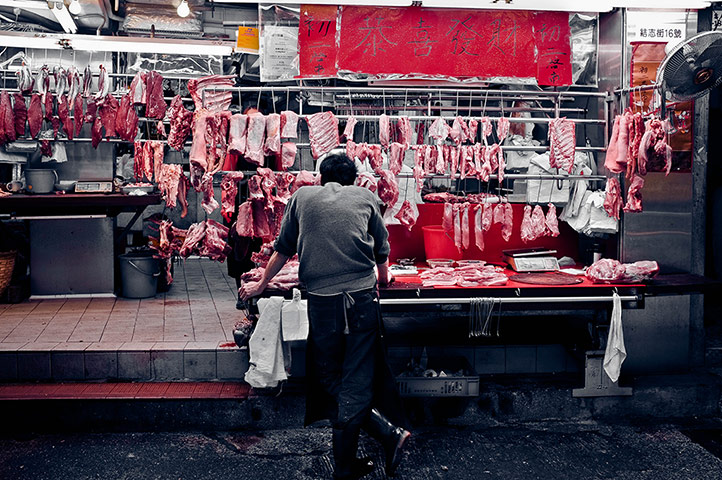
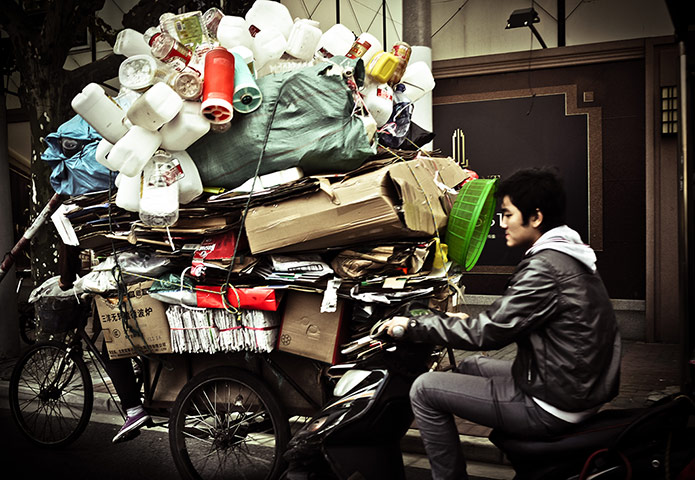
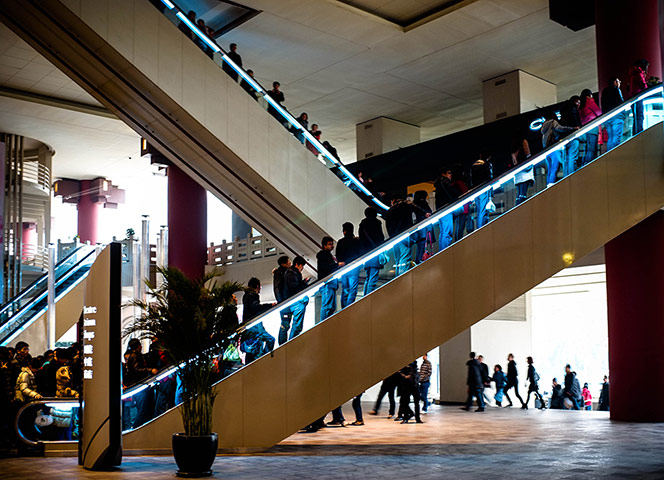
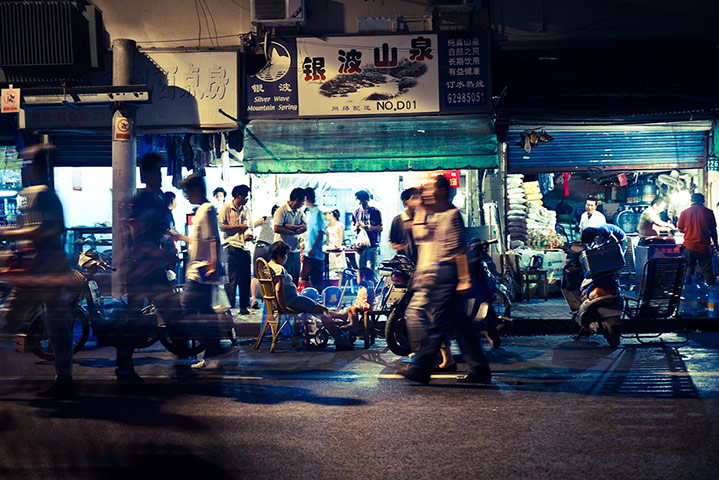
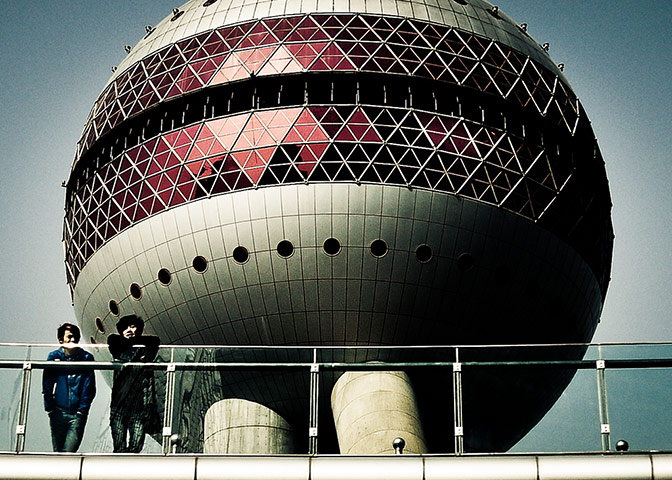
'Nothing is impossible' is the unofficial motto for transport in Shanghai, as drivers challenge the laws of physics on a daily basis – sometimes successfully, other times not so. This kind of transport is very common because it's very cheap and anybody can be an entrepreneur just by owning a bicycle or the modern version, which is rapidly replacing it in popularity, a moped. Photograph: Luca IsolaView from the observation deck at the 101th floor of the Shanghai IFC building of the Puxi side of Shanghai. Shanghai is divided into two 'portions' by the Huang Pu river: the west side is Puxi and the east side Pudong (xi meaning west in Chinese, and dong east). Puxi is the historic centre while Pudong was barren land and swamps until the 1990s when vertical fever started and the current skyline took shape. The view of thousands of buildings and skyscrapers stretching into the distance is amazing, even on a hazy day.Photograph: Luca IsolaA baozi is a steamed bun with delicious fillings of mixed meat, vegetables, mushrooms or any combination of these. They are steamed all day long and sold on every street corner. You can spot the best stalls by the long queues that usually form at breakfast time. Thick clouds of steam invade the sidewalk as people flock to get in line.Photograph: Luca IsolaThe candy man, delivering his goods by the traditional mode of transport.Photograph: Luca IsolaChinese New Year is the most important holiday in China, not only for the long break, but for its cultural significance. During the month-long festival more than two billion journeys are made in China, making it one of the biggest human migrations in the world. For people who have relocated in search of a better jobs and opportunities, this is the only chance in the year to travel home and reunite with friends and family. Chinese New Year is about rituals and traditions, ranging from food to prayers, from family to corporate ceremonies, involving fireworks, red lanterns and dragons. This period is so rich with activities and colour that when it comes to an end, on lanterns’ day, it leaves an empty and sad feeling –a feeling perhaps captured by the warden pictured here.Photograph: Luca IsolaStreet life in Shanghai includes business, so there's no problem setting up your barber shop on the pavement.Photograph: Luca IsolaClosing time at Tsukiji Aosora Sandaime, an elegant restaurant that serves authentic Japanese cuisine. It is the first branch of the famous Tokyo restaurant to open outside of Japan and uses fresh fish flown in from Nagasaki and prepared by the sushi chef in the traditional method. Photograph: Luca IsolaShanghai can be exhausting, sometimes even visually. Scattered random patterns, colours, fonts and general disarray create backgrounds that are impossible to ignore. Photograph: Luca IsolaSkyscraper silhouettes at dawn, as seen from the Shanghai Center. In the centre of the picture, in the distance, is the Shanghai World Financial Center, dubbed 'the bottle opener' with the Jin Mao Tower immediately to the left. In the foreground is another city landmark, the Marriott Hotel whose pyramid-shaped pinnacle houses a huge sphere that is brightly lit in changing colors at night.Photograph: Luca IsolaThe Jade Buddha Temple was founded in 1882 when two jade Buddha statues were imported from Burma. –One is sitting and a smaller one reclining, representing Buddha’s death. The temple now also contains a much larger reclining marble Buddha, donated by Singapore.Photograph: Luca IsolaAn elderly man catches up on the day's news on the streets of Shanghai.Photograph: Luca IsolaIn China meat markets and gaai si ('wet markets') are open air and the produce are hung up for all to see. Photograph: Luca IsolaIn China there is no official recycling policy or collection service. In big cities like Shanghai, Beijing or Guangzhou, you will see plenty of differentiated bins, but these are of little use as refuse collectors don't separate the rubbish. People such as this man make a living collecting plastic bottles, cardboard, metals and glass from the streets and selling it on to private recycling companies. There are thousands of migrant workers who move around the town, either on foot or bicycle, or on more sophisticated vehicles like this.Photograph: Luca IsolaThis was taken at the Shanghai Center, home of The Ritz Carlton Hotel, a huge complex in downtown Shanghai. As well as the five-star hotel, it houses luxury shops, an international supermarket, residential compound and, on the upper floor, a theatre. Just before show time, people crowd up the escalators that lead to the foyer.Photograph: Luca IsolaShanghai is an extremely crowded city and many houses, especially old ones, are small and narrow and often occupied by several families. No wonder then that Shanghainese, by nature, love to hang out outside, making the street a place to eat, play, read and relax. You even see people strolling the streets in their night dresses or pyjamas. Photograph: Luca IsolaA close up of the famous Oriental Pearl Tower, the first and perhaps the city's most famous high-rise landmark. It represents the new course the country has taken since the 1990s, when the phrase “to get rich is glorious” – attributed to the country's reformist leader Deng Xiaoping – was fully embraced in politics and also everyday life. Photograph: Luca Isola