
It's been called "the best idea that America ever had", and certainly the concept of national parks is the greatest single contribution the US has made to the worldwide cause of conservation.
The world's first national park was the 3,300 square miles of hissing geysers, alpine peaks and thundering waterfalls of Yellowstone, Wyoming. This geological smoking gun was set aside by Congress as early as 1872, after the pioneers of the government-sponsored Washburn-Langford expedition had been sent to verify the tall tales sent back by the backwoodsmen.
Legend has it that it was expedition member Cornelius Hedges, a Montana attorney, who first proposed at a campfire one night that such an area could not be trusted to private ownership, but "ought to be set aside as a great national park".
But the first area to be designated purely "for public use, resort and recreation" was the soaring granite walls, giant redwoods and tumbling waterfalls of the Yosemite Valley of California in 1864. Ten months before his assassination and with the Civil War still raging, President Abraham Lincoln took time out to sign a bill granting the valley and its nearby grove of venerable sequoias to California as a state park.
Of course, the Lakeland poet William Wordsworth is usually credited with the first airing of the idea of "a sort of national property, in which every man has a right and interest who has an eye to perceive and a heart to enjoy" in his Guide to the Lakes of 1810. But it would take another 140 years for the Lake District National Park to come into being.
In many ways, the American national parks system served to give the new world a sense of cultural heritage. But unlike the European historical legacy of cathedrals and castles, it was a heritage based on natural landscapes. It's no coincidence that many of America's scenic wonders are still termed "national monuments". The fast-expanding new nation had more land than it knew what to do with or could profitably exploit, so it could afford to conserve such areas as Yellowstone, Yosemite and the Grand Canyon, considered worthless by Congress.
Today, unlike the British, most Americans are intensely proud of their national parks, and they use their great outdoors widely and wisely.
Here's an A to Z personal selection of 10 of the best of the 53 national parks.
Arches, Utah
There's something about the salmon-pink Entrada sandstone that makes it strangely susceptible to the creation of natural arches. At the last count, there were more than 2,000 of these extraordinary flying buttresses here - more than anywhere else in the world - with names such as Delicate, North and South Windows, Skyline and Landscape.
The tough two-hour, three-mile trek across smooth, whale-back slickrock to Delicate Arch from the historic Wolfe Ranch, where a Civil War veteran once raised cattle, is one of the most rewarding hikes in canyon country, saving its dramatic view of the incredible free-standing soaring arch until the very last minute.
Entrance fee: $10 per car per week. How to get there: Five miles north of Moab on US 191, or take the Crescent Junction exit on I-70 south on to US 191 for 25 miles. Nearest airport is 15 miles north of Moab or Grand Junction, Colorado, 120 miles away. Don't miss: Arches Scenic Drive, especially the Windows Section and Devil's Garden; hike to Delicate Arch. Where to stay: Best Western Green Well Motel, Main Street, Moab, Utah (tel: 800-528 1234), or Big Horn Travelodge, Main Street, Moab (tel: 800- 325 6171). Camping in Devil's Garden. Further information: Park Headquarters, PO Box 907, Moab, Utah 84532, (tel: 435-719 2299, arches.national-park.com).
Bryce Canyon, Utah
The sunrise firing the incredible pink, yellow and orange pinnacles, towers and minarets of the canyon is an unforgettable sight. So it's a good idea to start your eight-mile drive around the amphitheatre of this comparatively tiny park if you can. The canyon takes its name from Mormon settler Ebenezer Bryce, famously alleged to have said when he first saw the forest of eroded sandstone spires: "That's a tough place to find a stray cow." The Navajo Loop Trail is a fairly strenuous, one-mile hike down into the tottering towers of the canyon, passing through the skyscraper-like confines of Wall Street and back again to Sunset Point.
Entrance fee: $20 per car per week. In season, you can pay $15 at the entrance and catch a shuttle bus into the park. How to get there: From Zion National Park (80 miles away), follow Utah 9 east, turning north on Utah 89 and then east on Utah 12 to Utah 63 and the entrance to the park. Nearest airport is Cedar City, 86 miles away. Don't miss: Bryce Amphitheatre; Bryce Point; Rainbow Point; Navajo Loop Trail. Where to stay: Bryce Canyon Lodge, AmFac Parks & Resorts, Bryce Canyon NP, Utah 84717 (tel: 435-834 5361), or Best Western Ruby's Inn, Bryce, Utah 84764 (tel: 800-528 1234). Camping in part of North and Sunset campgrounds. Further information: Park Headquarters, Bryce Canyon, Utah 84717 (tel: 435-834 5322, bryce.canyon.national-park.com).
Canyonlands, Utah
This huge incised plateau bears mute witness to the incredible erosive powers of the apparently insignificant Colorado and Green Rivers, which converge here. Make sure you visit the Island In The Sky and its visitor centre before driving on to the Green River, Buck Canyon and Grand View Overlook. And don't miss the easy, half-mile loop trail to the Mesa Arch, where the natural sandstone frames the Washer Woman Arch with the La Sal mountains in the distance.
Entrance fee: $10 per car per week. How to get there: From Moab take US 191 north to Utah 313 to The Neck entrance road (35 miles). Shuttles fly from Salt Lake City direct to Canyonlands Airport. Grand Junction Airport is 115 miles away. Don't miss: Island In The Sky Visitor Centre; Grand View Overlook; Mesa Arch trail; The Needles. Where to stay: Best Western Green Well Motel, Main Street, Moab, Utah (tel: 800-528 1234), or Pack Creek Ranch, off the La Sal Mountain Loop Road, PO Box 1270, Moab (tel: 435-259 5505). Camping at Squaw Flat and Willow Flat. Further information: Park Headquarters, 2282 SW Resource Blvd, Moab, Utah 84532 (tel: 435-719 2313, canyonlands.national-park.com).
Crater Lake, Oregon
Blue is not an adequate word to describe the many intense colours of Crater Lake - the deepest in the US. A full day is needed to appreciate the 33-mile Crater Rim Drive, allowing time for stopping at its many spectacular overlooks. If you have time, take the mile-long Cleetwood Trail which leads down to the lake and the boat trip to Wizard Island, the volcanic cone that formed in the lake after the eruption of Mount Mazama 7,000 years ago. Make the steep ascent to its summit for a mind-blowing view.
Entrance fee: $10 per car per week. How to get there: From the south, take Oregon 62 from Klamath Falls (55 miles away), or from the north, take Oregon 138. From the west, Crater Lake is 75 miles from Medford. Nearest airports are at Medford or Klamath Falls. Don't miss: Crater Rim Drive; Cleetwood Trail; Wizard Island; Phantom Ship. Where to stay: Rim Village/Crater Lake Lodge, 1211 Avenue C, White City, Oregon 97503 (tel: 541-830 8700). Crater Lake Lodge has a superb restaurant overlooking the lake. Mazama Village Motel, Crater Lake, Oregon (tel: 541-830 8700. Camping at Lost Creek and Mazama. Further information: Park Headquarters, PO Box 7, Crater Lake, Oregon 97604 (tel: 541-594 2211, crater.lake.national-park.com).
Grand Canyon, Arizona
"Awesome" is a vastly overused word in America, but it is the only one that adequately describes the enormous Grand Canyon National Park. To stand on the rim at remote and rarely visited Point Sublime, where there are neither crowds nor restrictive handrails, is to sense something of the jaw-dropping wonder that the first discoverers of this mile-deep cross-section of the earth's geological history must have felt. Or just gaze out from one of the many popular viewpoints, such as Bright Angel Point on the North Rim at sunrise or sunset, and try to fathom its sheer immensity and experience the ever-changing kaleidoscope of colour.
Hardy hikers will want to test themselves on the challenging Bright Angel Trail which zigzags down eight gruelling miles and 4,500ft to meet the river. But remember, unless you use the famous mules, you have to climb up out again.
Entrance fee: $20 per car per week. How to get there: South Rim: From Flagstaff (about 90 miles away), take US 180 to South Rim entrance; or US 89 to Cameron then Arizona 64 to Desert View entrance. North Rim: Take Arizona 67 from Jacob Lake through the Kaibab National Forest. The two rims are only 10 miles apart as the raven flies, but 215 miles and five hours by car. Nearest airports are the Grand Canyon Airport on the South Rim, or at Flagstaff, Las Vegas or Phoenix. Don't miss: South Rim: Hermit Road (West Rim Drive); Desert View Drive; Bright Angel Trail. North Rim: Cape Royal Road; Bright Angel Point; 4x4 Trail to Sublime Point. Where to stay: South Rim: Bright Angel Lodge and Cabins or El Tovar Hotel, South Rim, Grand Canyon; both operated by AmFac Parks and Resorts (tel: 303-297 2757, amfac.com). Camping at Mather and Desert View. North Rim: Grand Canyon Lodge, which also has a fine restaurant with spectacular views across the canyon (tel: 303-297 2757), or Quality Inn, PO Box 520, Kaibab, on Arizona 64 (tel: 800-228 5151). Camping, and the Trailer Village, is at North Rim. Further information: Park Headquarters, PO Box 129, Grand Canyon, Arizona 86023 (tel: 520-638 7888, grand.canyon.national-park.com).
Black Canyon of the Gunnison, Colorado
From the vertiginous Chasm View, the canyon is far deeper than it is wide: you could almost speak to the people on the North Rim nature trail opposite, were it not for the constant roar of the Gunnison River 2,600ft below. And at the nearby Painted Wall viewpoint, where huge, marbled streaks of pink and white pegmatite splash the granite wall opposite, two Empire State Buildings could be stood within the canyon's depths and still not reach the top. Gunnison is the newest national park, designated by President Clinton in 1999.
Entrance fee: $7 per car per week. How to get there: The South Rim is 15 miles from Montrose via US 50 and Colorado 347. The North Rim is 80 miles from the South and reached by taking US 50 west and Colorado 92 on to the partly paved North Rim road (closed in winter). Nearest airports are at Gunnison and Montrose. Don't miss: South Rim Drive; North Rim Drive; Oak Flat and Gunnison Route Trails. Where to stay: Contact the Montrose Visitor and Convention Bureau on 970-240 1429, or the Gunnison County Chamber of Commerce on 970-641 1501. There are campsites on both North and South Rims. Further information: Park Headquarters, 102, Elk Creek, Gunnison, Colorado 81230 (tel: 970-641 2337).
Mesa Verde, Colorado
Surprisingly, Mesa Verde is the only national park to have been designated for its cultural value. Discovered by two cowboys tracking stray cattle in 1888, these astonishing cliff dwellings were built from AD550-1300 by the Ancestral Puebloans.
Book your tickets early for the Cliff Palace and Balcony House sites at the visitor centre, then drive to the Chapin Mesa Museum, with its dioramas of what life was like in the cliff villages. Cliff Palace is the largest cliff dwelling in North America with 150 rooms and no less than 23 of the mysterious circular, church-like "kivas". The ranger-led tour involves some ladder-climbing. Balcony House is even more difficult to reach, and involves the ascent of an airy 32ft wooden ladder and crawling out through a narrow tunnel. Not for the faint-hearted.
Entrance fee: $10 per car per week. How to get there: From Cortez, take the US 160 east for eight miles to the park entrance, then follow the winding minor road up to and along the North Rim for another 15 miles to reach the Far View Visitor Centre. It is another 5 miles to the park headquarters at Chapin Mesa, the museum and the main cliff dwelling sites. Nearest airports are at Cortez and Durango. Don't miss: Far View Visitor Centre; Chapin Mesa Museum; Spruce Tree House; Cliff Palace; Balcony House. Where to stay: Far View Lodge, Mesa Verde Co, PO Box 277, Mancos, Colorado 81328 (tel: 800-449 2288), or Best Western Sands, 1120, Main Street, Cortez, Colorado (tel: 800-528 1234). Camping at Morefield. Further information: Park Headquarters, Mesa Verde National Park, Colorado 81330 (tel: 970-529 4465, mesa.verde.national-park.com).
Mount Ranier, Washington
You should make the pilgrimage to Paradise even if you only have a day to visit these 386 square miles of national parkland in Washington's Cascade Range. The 18-mile trip through magnificent forests of giant Douglas firs, western red cedars and hemlocks takes you across Kautz Creek, scene of a huge glacial flood in 1947, to the Longmire Museum and Wilderness Information Centre, with views of the glacier-draped, 14,410ft volcanic summit through the trees. Eleven miles further on, you reach Alpine Paradise and the flying saucer-shaped Henry M Jackson Visitor Center at 5,400ft, with its panoramic views of the snowy southern face of the mountain.
Entrance fee: $10 per car per week. How to get there: Rainier is 95 miles from Seattle and 70 miles from Tacoma. Take the I-5 to Washington 7, then follow Washington 706 to the Nisqually entrance. Nearest airports are at Seattle or Portland. Don't miss: Longmire Museum and Wilderness Center; Henry Jackson Visitor Center, Paradise; Box Canyon; Grove of the Patriarchs Trail. Where to stay: National Park Inn or Paradise Inn, both through Mount Rainier Guest Services, PO Box 8, Ashford, Washington 98304 (tel: 360-569 2275). Camping at Sunshine Point. Further information: Park Headquarters, Tahoma Woods, Star Route, Ashford, Washington 98304 (tel: 360- 569 221).
Yosemite, California
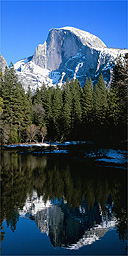
Scottish-born national park pioneer John Muir dubbed the Californian Sierra Nevada "the range of light". First protected in 1864, this tight little valley surrounded by 3,000ft vertical granite walls can suffer from overcrowding in summer, when as many as 15,000 people a day can be rubbing shoulders in tatty Yosemite Village. But you can leave the crowds behind by heading for the hills on the classic four-mile hike down from Glacier Point, or recapture the sylvan peace which Muir found among the massive, 2,000-year-old cinnamon-barked sequoias of Mariposa Grove.
Entrance fee: $20 per car per week, free shuttle buses in valley. How to get there: Yosemite is about 70 miles east of Merced. Take California 140 to the Arch Rock entrance, or California 120 to the Big Oak Flat entrance. From Fresno in the south, take California 140 to the South Entrance. Amtrak trains provide shuttle buses from Merced. Nearest airports are at Merced and Fresno. Don't miss: Glacier Point; Olmsted Point and the Tioga Road; Tuolumne Meadows; Mariposa Grove; Lee Stetson's one-man John Muir tribute at the visitor centre; Four-mile trail from Glacier Point; Yosemite Falls Trail. Where to stay: The Ahwahnee, Curry Village and Tuolumne Lodges and the High Sierra campsites are all administered by Yosemite Concession Services Corp, 5410 East Home Road, Fresno, California, CA 93727 (tel: 209-252 4848). Campgrounds are at Hodgdon Meadow and Tuolumne Meadows. Further information: Park Headquarters, PO Box 577, Yosemite National Park, California CA 95389 (tel: 209-372 0200, yosemite.national-park.com).
Zion, Utah
The first impression is that this is Yosemite in Technicolor. The bright red and orange walls of Navajo sandstone spring 3,000ft from the narrow and slightly claustrophobic floor of Virgin River Valley. The place was given its heavenly name by 19th-century Mormons, who saw these huge rocks as natural temples. You can escape the noisy, stifling valley shuttlebus on branch trails such as Angel's Landing and the Riverside Walk, which leads into the walls of The Narrows, at the head of the canyon.
Entrance fee: $20 per car per week, a free shuttle bus takes you into the canyon. How to get there: It is about 60 miles from Cedar City to the South, Zion Canyon entrance, taking the I-15 to Utah 17 and then Utah 9. From Kanab, take US 89 to the Mount Carmel junction with Utah 9 to reach the East Entrance. From Las Vegas, take I-15 and Utah 9 to the South Entrance. Nearest airports are at Cedar City and St George. Don't miss: Zion-Mount Carmel Highway and Chequerboard Rock; Zion Canyon Scenic Drive; Angel's Landing, Riverside and West Rim Trails. Where to stay: Zion Lodge (off Utah 9) AmFac Parks & Resorts, Cedar City, Utah 84720 (tel: 303-297 2757), or Best Western Driftwood Lodge, 1515 Zion Park Blvd, Springdale, Utah (tel: 800-528 1234). Camping at Watchman, South Entrance or Lava Point. Further information: Park Headquarters, Springdale, Utah 84767 (tel: 435-772 3256, zion.national-park.com).
For $50, you can buy an annual Golden Eagle Passport which admits your car and its occupants to all parks and federal sites. If you are over 62, you can get a lifetime Golden Age Passport for just $10, and disabled people get a Golden Access Passport for free. Further information: us-national-parks.net or nps.gov.
