
Aah, the taste of a tomato in Tasmania. Tasmanian tomatoes taste like tomatoes used always to taste and should taste again. Not your innocuous, watery rubbish but bursting with in-your-face flavour. Tasmanian tomatoes could easily be substituted for the food eaten in that infamous scene in the film Tom Jones when Albert Finney and Joyce Redman munched on chicken legs while mentally stripping each other naked.
But that's enough about tomatoes. They are mentioned only to emphasise that Tasmania is absolutely crammed full of good things: the food is fantastic, the wine wonderful, the scenery superb - and that's probably enough alliteration for the time being, too.
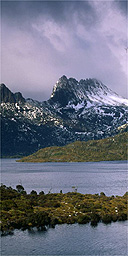
Tasmania is not the normal choice of visitors going to Australia for the first time, given the more obvious attractions of places like Uluru and the Great Barrier Reef. But it is fair to say that no area in Australia has more scenic beauty, more pastoral pleasure, packed into it than the place they call the Natural State.
Paradoxically, there is horror here, too, for this was once Van Dieman's Land, a name accursed by convicts, striking terror into the thousands of wretches sentenced to deportation. That it never entered the heads of Britain's rulers at the time to go to Australia themselves and leave the convicts behind in the United Kingdom shows blinkered thinking to a quite extraordinary degree. Instead, they set up places of unbelievable cruelty, lorded over by the most vicious sadists to be found anywhere in the Empire.
Tasmania's hell hole was Port Arthur, a remote but particularly beautiful spot on a peninsula east of Hobart. It has become the single most-visited tourist attraction in Tasmania, holding an awful fascination for people who simply cannot believe that man could do unto man (and sometimes woman) that which they undoubtedly did.
Nowadays, there is an extremely well-run visitor centre at Port Arthur that conducts tours and provides more than enough to fill an entire day. There was also once a pleasant, outdoor café overlooking the bay. Now Port Arthur has housed some vile people and some people made vile but nothing viler has occurred at that place than when, a few years ago, a deranged man walked into the café and opened up with an automatic rifle. He killed 34 people and when he was finally arrested said: "Is that the world record?"
Just above Port Arthur, on a headland, is the stunning Tasman golf club. On the day of the shootings, they were having a club competition and, on hearing the shots, one of the members wondered idly what was happening. When he finished, he found out. His wife and two daughters were among the victims.
It is almost imperative to visit Port Arthur but, having been, it is wonderful to get back to the present, for in few places is it more compelling than in Tasmania. Take, for instance, the Tamar Estuary. It leads, as it does in Cornwall, to Launceston - which in Tasmania is pronounced Lon-cess-ton. Signposts in the area point to Sidmouth and Exeter, as they do in the UK, although how Kelso got in there is a mystery.
Launceston is a thriving community but within 10 minutes of the town centre there is idyllic rural scenery, the river surrounded by a green and gold wonderland. The green is supplied by the trees and the vines of local wineries; the gold by the fields, and this region of Tasmania is magnificent country.
There is a touch of the Pyrenees about some of the hillier bits, a hint of how the Highlands of Scotland might be if they ever warmed up. There are landscapes, skyscapes, seascapes, even treescapes as the ubiquitous eucalyptus twists itself into fantastical formations. Only occasionally is the visiting driver jerked back into the best-forgotten nastiness of the real world when a tree-trunk-laden lorry hurtles past at a dangerously high speed, driven with that arrogance and contempt that large vehicles have for others. Otherwise peace reigns, for these are areas where the ratio of cows to cars is about 1,000 to 1 - conservatively.
Even in summer, it is a certainty that you will have much of this lovely country to yourselves. Take Lulworth, for instance, a speck on the map on the Bass Strait coast. No more than a cluster of houses, it features an extraordinarily beautiful beach, like a child's drawing of what a beach should be, a perfect mile-long semicircle of sand surrounding the bluest of seas. On a hot summer's day, there were no more than a dozen people.
Touring in Tasmania is not just delightful on the outside, overnights and the inner man are also wonderfully catered for. This is a country which, like Ireland, has brought bed and breakfast to an art form; necessarily so because the towns and villages are, for the most part, too small to support hotels.
Another good thing is its wine. One big mainland Australia winery would crush more grapes than all of Tasmania, but its whites and particularly the rieslings, are getting worldwide recognition. Even if they weren't, some of the wineries would be worth visiting.
And even if you don't like wine, you should go to Tasmania, if only for the tomatoes. At £1 per kilo they don't need salt, or pepper, or even the sugar grandma used to dip them into. Just eat them, raw.
Way to go
Getting there: British Airways (0845 7733377, britishairways.com) flies Heathrow to Hobart return from £817.90 inc tax, Qantas ((0845 7747767, qantas.com.au) for £973 plus taxes.
Where to stay: In Hobart: Colville Cottage on Mona Street, Battery Point (6223 6968, email colvillecottage@bigpond.com), double rooms from £50 a night. Hosts Louise and Carl can help arrange trips and activities. B&Bs on the road: Wagner's Cottages, Swansea (+3 6257 8494); Millhouse on the Bridge, Richmond (+3 6260 2428, millhouse.com.au); Racecourse Inn, Longford (+3 6391 2352); Bowerbank Mill, Deloraine (+3 6362 2628).
Further information : Tasmania Tourism: tourism.tas.gov.au, Tasmania State Holiday Planner: fax +3 6230 8353, discovertasmania.com.au.
