
You may not subscribe to the mathematical proof that today is “officially” the most depressing of the year, but January is undeniably a glum month when water coolers across the land are witness to the moans, groans and pipe dreams of office workers resolving to escape the 9-5 this year.
Another reliable January fixture is the holiday booking frenzy, with over half the UK’s adult population already paid up for a summer 2007 break, according to one survey. So is it possible to combine the dual dreams of a major lifestyle change and a love of travel? Our intrepid panel tell us how they managed to get out of the office, for good, calling on a range of skills from a love of kitesurfing to a willingness to work 12-hour days researching Venezuelan cuisine.
Richard Fanshawe, 26, banker-turned-kitesurfing instructor
“I used to be an Investment Banker in London living in Clapham with my brother and some good university friends. Shame I never used to see them very much! My brother and I would meet in our kitchen at 4am having just finished work. I hated the total unpredictability of my working hours from one day to the next, never being able to make plans for fear of having to cancel all the time and having next to no control over my own life. I felt ill everyday, stuck in a rut and tired of life - at the age of 23!
“I realised that I was not in the right job or with the right company. I loved my hobbies – often involving travel - and couldn’t stand not having the time or the energy left to pursue them. I also had to have an operation on my kidney having felt pretty dreadful for quite some time. Another big influence on my decision was the tragic death of a friend who was working as a freelance reporter in Iraq. It taught me that I should get out and try to do something I enjoyed because you just never know what is going to happen.
“So, I quit, spent a lot of time travelling and met my business partner, Andrew Statham in Canada. I told him that I wanted to learn Spanish and kitesurfing and that I was going to this brilliant place called Tarifa to do both. He decided that he wanted to do the same. So now we’re back in the UK, setting up a watersports travel business focussed on sabbatical and time-out courses and holidays in some of the most amazing locations around the world. It is a real eye-opener and one hell of a challenge to get off the ground. But the beauty about this kind of business is that there is no typical day, we will do everything from admin and accounts, right through to hosting the courses and washing boards and kites at the end of a day’s instructing. The combination of office and outdoor work (especially on the beach!) is a very satisfying one – and in the gaps in between we still find some time to go kiting or surfing ourselves.”
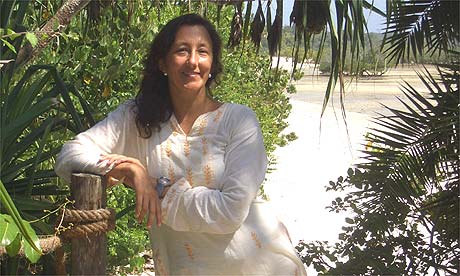
Julia Bishop, 44, management consultant turned beach resort manager in Zanzibar
“I have come to Africa every year since leaving it 20 years ago, so it was probably inevitable that I would want to settle here eventually. Born and raised in Kenya, I studied and then worked in Europe for 20 years. After 15 years at ICI, I took a year out to sail around the world in the BT global challenge in '96, and returned to London for five years to work as a consultant for Ernst & Young.
“I lived in a little flat in Bloomsbury and it wasn’t long before wanderlust kicked in again, this time sated by a four-month leave of absence in 2003, to drive a Land Rover from London to Cape Town via the Middle East for an African charity. By then I felt so reconnected with Africa that the yearn to return became overpowering. I had nothing left to prove to myself, and resigned on my return. My brother saw the ad for this job in the Sunday Times and threw down the gauntlet to me. It was always something of a family joke that one day I would be running a bar in Zanzibar - and at Fundu Lagoon there are three!
“Now I manage a little hotel on the lush spice island of Pemba, part of the Zanzibar archipelago off the coast of Tanzania. The hotel is remote - the epitome of Robinson Crusoe living - stretched along 40 acres of forest and fringed by 300m of classic tropical beachfront. Add 100 charming and sometimes crazy Zanzibari staff, 32 high-end and high-expectation guests from around the world, some well-dodgy infrastructure (all deliveries, including guest transfers, must be made by sea), and logistics from hell (infrequent ferries, shaky supply lines), and you have, in a coconut shell, my challenge.
“But then my work wardrobe now consists of soft cotton, Indian/Arab-style loose, cool, comfortable clothes and generally no shoes - this is after all a barefoot paradise. My high-street cardboard latte has been replaced with fresh-roasted Tanzanian coffee and I don’t need gym membership or grim treadmills - giving new arrivals a tour of the hillside hotel three times a day is bound to get my heart beating.
"The work is very rewarding especially when you get involved in environmental protection and healthcare projects for the local community, such as building a village school, raising money to send children away for operations and digging boreholes.
“Night noises are very different here - now I have crickets whirring and bushbabies calling, and the evenings are full of dazzling stars or beautiful silvery moonlight. In Bloomsbury I had the hiss of hydraulic brakes of the bus stopping outside, police cars screaming past and the clanking of the dustbin lorry early in the mornings!
“I wouldn't mind being able to have a haircut, or meet my friends for a drink one Saturday, or go to a West End show. I do have the occasional fantasy about crispy frosty mornings and snow, or French cheese and salami, but not so much that it makes me homesick.”
Jens Porup, 32, computer programmer turned Lonely Planet guide writer
“I was living in Melbourne for around seven years, working primarily as a computer programmer. But I see myself more as a playwright - it’s the Hemingway thing, trying to find a cheap lifestyle so that I could work on my plays and a novel I want to start. As a writer I have to invest a lot of time in what I do to make money in the end, and I just can’t do that in a first-world country.
“Now, I’m based in Cali, Colombia, home of the Cali drug cartels (although they are not nearly as bad as they used to be!) and I’ve just finished my first Lonely Planet (LP) contract, working as co-author of the 5th edition of the Venezuela country guide. Before I left Australia to come to South America, I sent some
clips and links to LP. Every couple of months I sent something different to pester them. Eventually, I got an email saying they liked the clips and my writing style, and wanted me to do a
writing test. I made it into their writers’ pool and pitched for work on several South American guides.
“LP deadlines are so tight it pretty much entails working 12 hours a day - but then I can have nine to 12 months’ uninterrupted writing time. I’ve made enough in just over two months to live free and clear for a year. The same salary would probably last me one month in London.
“I have been travelling all my life. My parents were flight attendants – they met working a flight to Hong Kong. But I find that I enjoy being an expat more than the business of travelling. Travelling long-term can be extremely depressing and often you’re just scratching the surface. When you live expat you begin to understand a place.
“This lifestyle gives me the chance to concentrate 100% on what I’m passionate about. Life’s too short to do two things well: writing plays and writing code. But I do miss good, spicy Thai food. Everything here is bland as! One thing I would say, though, is that the grass is always greener on the other side of the fence. You will always have to work at it!”
