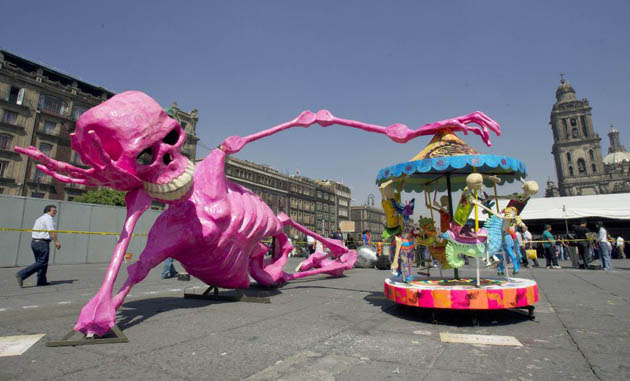
Day of the Dead celebrations can be traced back 3,000 years in Mexico when it was common for people to keep skulls as trophies and symbols of life and rebirth. The modern festival is marked over two days when the living visit the graves of friends and relatives – deceased children are honoured on November 1, adults November 2
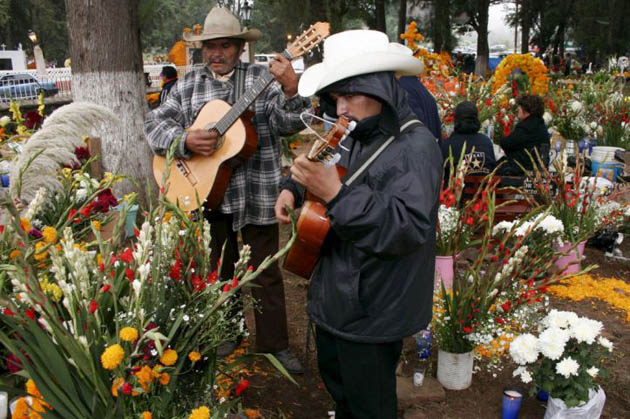
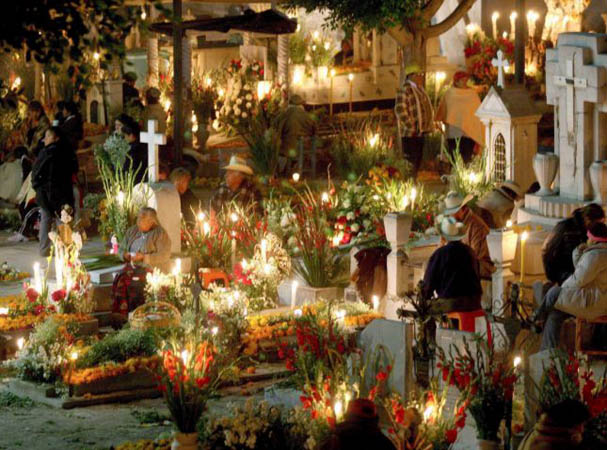
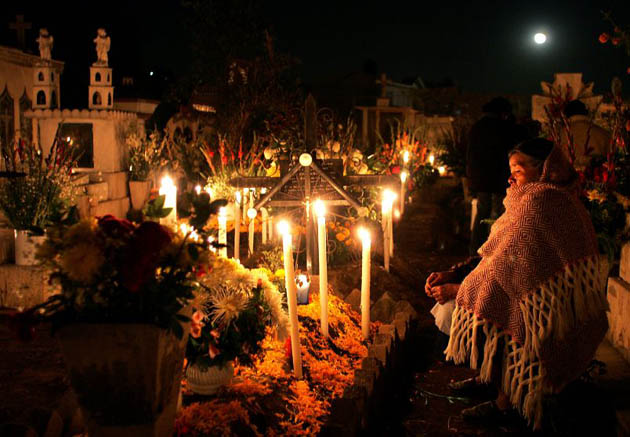
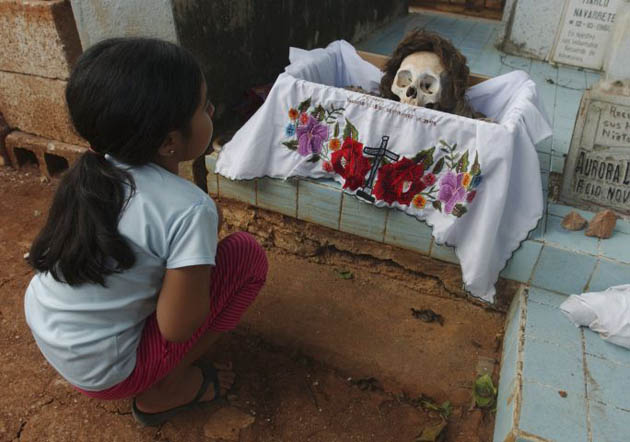
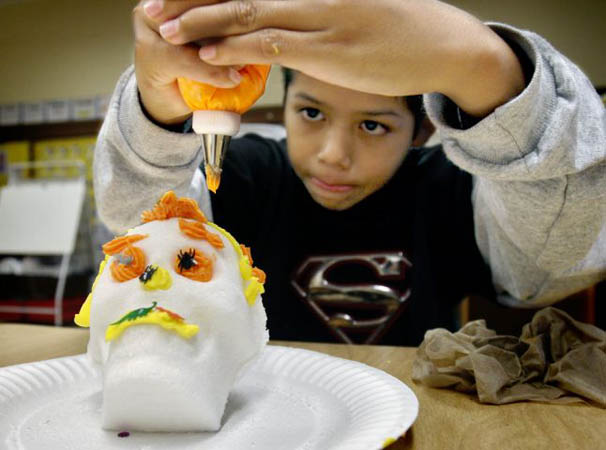
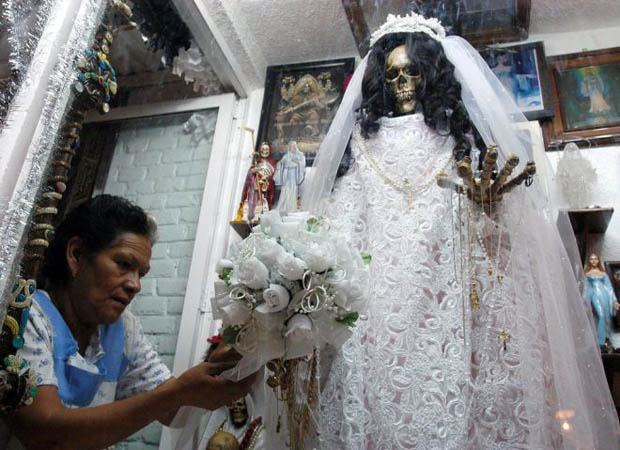
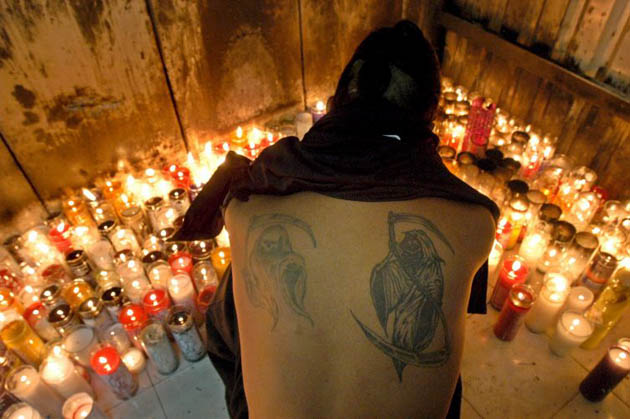
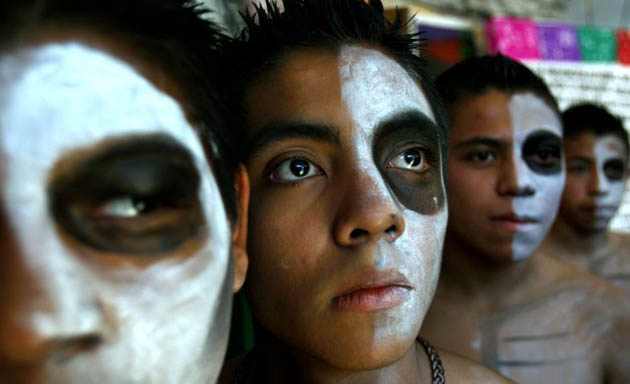
Tzintzuntzan, Mexico: Two men sing in front of a grave surrounded by fresh offerings of flowers and food Photograph: Leopoldo Smith/EPABenito Juarez, Mexico: the pantheons at Tlacotepec, a Totanacan village in the Sierra of PueblaPhotograph: Ulises Ruiz/EPAMexico City, Mexico: a woman prays in front of a relative's grave at the cemetery of San Gregorio AtlapulcoPhotograph: Luis Acosta/AFPSan Miguel de Allende, Mexico: marigolds and a skull with a sombrero decorate a grave Photograph: Craig Lovell/CorbisPomuch, Mexico: Maya Indian Litzy Moo, 7, looks at the bones of her grandmother in a small wooden crate on top of a newly embroidered clothPhotograph: CorbisWichita, USA: Irving Elementary fifth-grader Jose Luis Tonche decorates a sugar skull with icingPhotograph: Mike Hutmacher/APMexico City: a believer of Saint Death, the favorite saint for the delinquent, puts an offer in the altar during the Day of the Dead celebrationsPhotograph: Mario Guzman/EPAMexico City, Mexico: a Death believer prays during the celebration of Saint Death in the popular Tepito neighborhoodPhotograph: Mario Guzman/EPAMexico City, Mexico: young men with their faces painted, representing deathPhotograph: Marco Ugarte/APMexico City, Mexico: a giant artwork of a skeleton sits in Zocalo plazaPhotograph: Gregory Bull/AP