
As the ICE express slid effortlessly out of the station towards the flat lands of Saxony, the bass soloist began singing his big aria from Johann Sebastian Bach's cantata 96. "Safely by Thy pathway lead me, straight to Heaven's portal speed".
With no hills in the way, the path was straight; there was certainly plenty of speed; safety had to be taken on trust.
This was an autumn Saturday of bright sun in the year that has seen the 250th anniversary of Bach's death; the next day would be the 18th Sunday after Trinity, for which cantata 96 was written. And on that Sunday evening it would be performed in the Thomaskirche in Leipzig, the church where Bach now lies buried.
That every word of the cantata was audible on the CD player is a tribute to the soundproofing of German trains, in which doors glide open to reveal blue carpets, yards of fine wood and quietly contented passengers. This train was named after the painter Lucas Cranach and it paused for a while in his home town of Wittenburg.
Half-an-hour later, Lucas Cranach came to an unjuddering halt in Leipzig's hauptbahnhof, the largest terminus in Europe with 27 platforms, one for every year that Bach spent in the city.
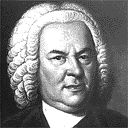
The traffic-free city centre, famed for its trade fairs since 1497, is contained within the ring road on the line of the old city walls and a stroll from one side to other takes barely 15 minutes. Strolling is mandatory; Leipzigers do not rush, not least because there are so many diversions down the courtyards of the trading houses in which merchants sold their wares. Try Barthels Hof, with its lofty baroque bay windows. Stop for a coffee and gaze about. Then have a look at the only extant Bach portrait in the magnificent old city hall of 1556.
And you have to stop for another coffee at the Coffee Baum café and coffee museum, founded in 1619 and reopened after restoration only a couple of years ago. Downstairs, the floorboards are bare and the wooden tabletops are scrubbed white; the chairs lack luxury and match the hard benches; the walls are a sober cream. The waitresses are kitted out in amber peasant frocks, the coffee is excellent, the atmosphere tranquil. Robert Schumann used to come here with his friends and there is a plaque on the wall to prove it.
Music has always thrived in Leipzig: Wagner was born here and is commemorated on a plaque on the walls of a department store; Mendelssohn has a house on Goldschmidtstrasse; the orchestra of the Gewandhaus (a concert hall that looks like a designer version of a nuclear bunker) is the oldest of its kind in Europe.
There are literary associations, for Leipzig has always been bookish: in Auerbachs Keller, a restaurant in the Madler passage, murals carry 19th-century versions of scenes from Goethe's Faust and a huge barrel is a replica of the one on which Faust rode from the cellar in 1525. Drink too much of the white wine drawn from it by baggy-shirted waiters and you too will sell your soul to Mephistofeles.
But we are here for sober Bach. He has a statue outside the Thomaskirche (the guides say his pockets are turned out because, with 20 children to support, he was always broke) and there is a museum in his honour across the way. It is a little worthy, especially if your German does not extend much beyond einbahnstrasse. The best bit is the listening room, where CDs play snatches of the fourth Brandenburg concerto and the cantata Ein feste Burg ist unser Gott: the man is in the music, not the display cases.
The city's musical instrument museum is more entertaining. Press a button and listen to a tape of the nearby hammerflugel, the world's oldest surviving fortepiano; press other buttons to hear a musical clock, a polyphon (an early jukebox), a Schweizer walzenspieldose (a musical box with bells on). There is an abundance of crumhorns, viols and a glass harmonica (for which Mozart wrote one or two numbers).
Back to Bach: it's concert time at the Thomaskirche, de-Baroqued 110 years ago and returned to a neo-Gothic style the composer would never have known. Lofty and long, it remains a shrine where Bach's successors direct its famous boys' choir. But tonight the boys have the night off.
The Bach Cantata Pilgrimage, led by Sir John Eliot Gardiner and featuring his Monteverdi Choir and English Baroque Soloists, has arrived for the 48th concert in a peregrination around Europe (and eventually the US) in which all 198 surviving cantatas will be performed on their appointed days.
After 10 months on the road and at least one concert a week, they are used to setting up and tuning up; they take their own chamber organ almost everywhere they go. (Because plans for concerts in Latvia and Estonia have had to be abandoned, the pilgrims play in London tonight and tomorrow.)
Bass soloist Gotthold Schwarz sings the aria heard at 110mph the previous day; the evening also includes cantatas 116 and 169 and the church is sold out, every stern post-reformation pew packed; the best seats are, curiously, at right angles to the chancel.
Some pilgrimage groupies, veterans of several concerts, have made the trip; one row is full of musical tourists from Manchester; across the way is the director of the Bolton Chamber Choir, which is making its own shorter pilgrimage to Bach's city.
The next day Bolton's singers will perform in the Nikolaikirche. It's less austere than the Thomaskirche, proclaims itself "open to all" and has played its part in history. In the years leading to the autumn of 1989, Christians and non-Christians gathered every Monday to talk, debate and protest. The government of the old GDR responded with road blocks and arrests. On October 9 1989, it looked as if a violent showdown was coming when 600 party members entered the church.
The event is documented in the chilling museum dedicated to the follies of the Stasi, the hated secret police, and in a leaflet available in many languages at the Nikolaikirche, the pastor explains how the government stooges found themselves listening to the Sermon on the Mount on that revolutionary night. Protest leaders appealed for calm. "As we - more than 2,000 people - came out of the church, tens of thousands were waiting outside in the square," writes the pastor. "They all had candles in their hands. If you carry a candle, you need two hands - you have to prevent the candle from going out. You cannot hold a stone or a club in your hand."
The GDR collapsed and a member of the old regime said: "We had planned everything. We were prepared for everything. But not for candles and prayers."
Bach's cantata 96 ends with a prayerful chorale: "Awake us through Thy grace that we put on the new man, the old man's power efface."
Six of the best ... kellers and cafés
Auerbachs Keller: A subterranean experience not to be missed; bold soups and hearty entrées in a Faustian setting.
Café Concerto: Opposite the Thomaskirche. Plush red seats, etching of the Brandenburg concertos on the walls. Wide range of teas; sticky cakes.
Café Kandler: Close to the Thomaskirche. Even stickier cakes. At lunchtime, try a beer and a huhnchenpuffer - a potato cake loaded with mushrooms and cheese.
Café Riquet: An art nouveau riot dating from 1909. Chinese pagoda on top; tiled panels with peacocks and elegant Chinese ladies; two elephant heads above the entrance. Tea, coffee and more cakes.
Barthels Hof: Restaurant in the courtyard of the same name. Eat inside or out. Solidly bourgeois with occasional Wildfest with das grosses Wildbuffet .
Weinstock: Café-restaurant on the sunniest corner of the central market square overlooking the old city hall. Caesar salad with shrimps for a mere £6.
The practicals
Virgin Express (020-7744 0004, www.virgin-express.com) flies from London to Berlin for £103 return. Berlin-Leipzig on the ICE express, second class return, costs £43.40 from Deutsche Bahn (0870 2435363). A night at Hotel Fürstenhof, Tröndlinring 8 (0049 3411400) costs DM270 single (£83), DM320 double. Further information from the German Tourist Office on 020-7317 0908, www.germany-tourism.de and the Leipzig Tourist Office 0049 3417104260, (www.leipzig.de)
