
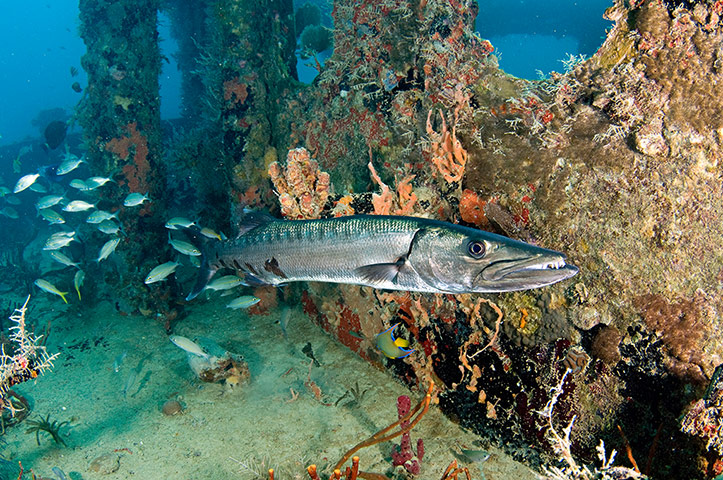
Fierce-looking predators with long bodies and powerful jaws, great barracuda can grow to more than six-feet long. Shoals of juveniles are a fairly common sight in relatively shallow waters around St Kitts and divers frequently encounter lone, mature great barracuda on wreck dives. The fish are curious and will often follow divers around, but they rarely attack them. Photograph: Jonathan Bird
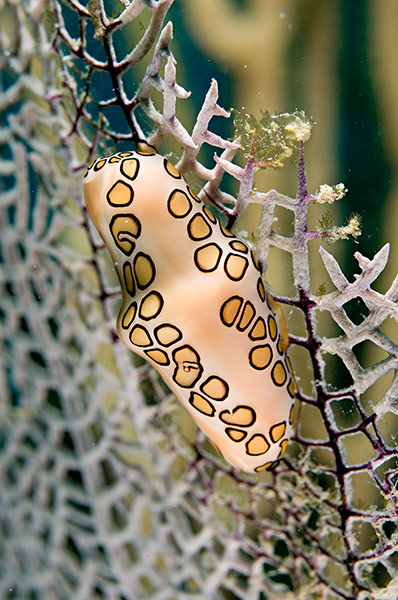
A type of marine snail, cowries live and feed off coral reefs, and many species can be found around the coast of St Kitts. The rare flamingo tongue cowrie – with its striking orange-yellow spots outlined in black – inhabits shallow waters and is much sought after by human collectors, as well as by predators such as spiny lobster and puffer fish. Photograph: Jonathan Bird
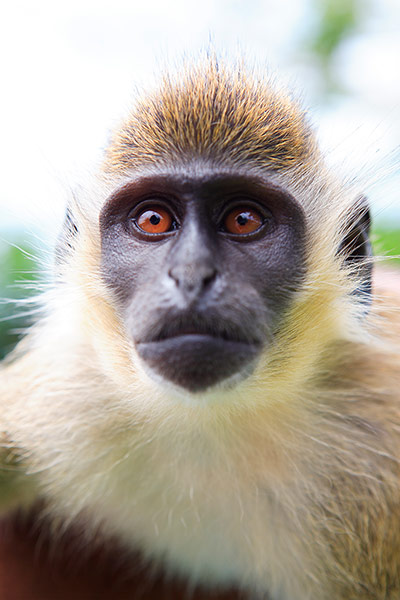
These black-faced primates were brought to St Kitts as pets in the 17th century by the French, who then controlled the island. They settled and multiplied, and St Kitts’ monkey population – more than 50,000 – now exceeds the human one. Vervet monkeys live in groups across the island, feeding on the ground and sleeping in trees. Photograph: Greg Johnston/Lonely Planet Images
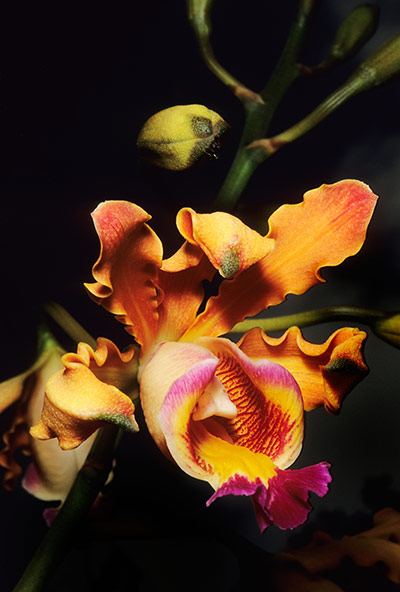
St Kitts is particularly rich in orchids. The myrmecophila brysiana species shown here is an epiphytic plant – so, although it grows on other plants, it is not parasitic and mainly gets its nutrients from air and rain. The species has slightly scented flowers and often hosts colonies of ants in a symbiotic relationship: the ants harvest the plant’s nectar and bring in minerals that help to feed it. Photograph: Alamy.com
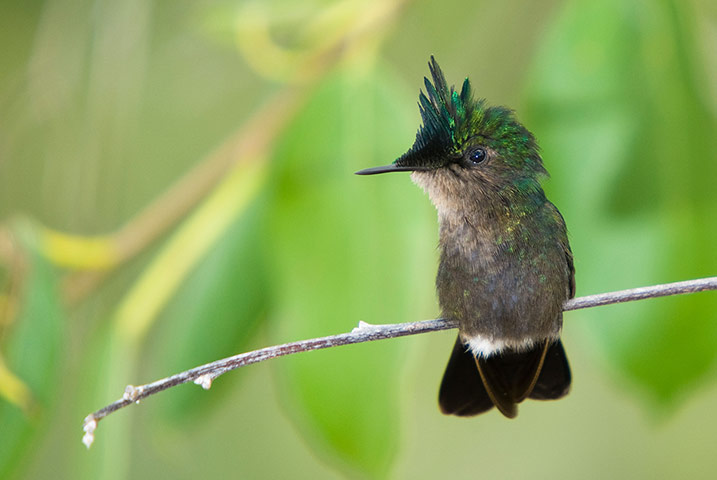
Of the 18 species of hummingbird that inhabit the Caribbean, the Antillean crested hummingbird is one of the most common on the islands of the Lesser Antilles, especially St Kitts. One of the few hummingbirds with a crest, it lives largely in “edge habitats” (between human development and rainforest) and has a body measuring just 8-9cm. Photograph: Alamy.com
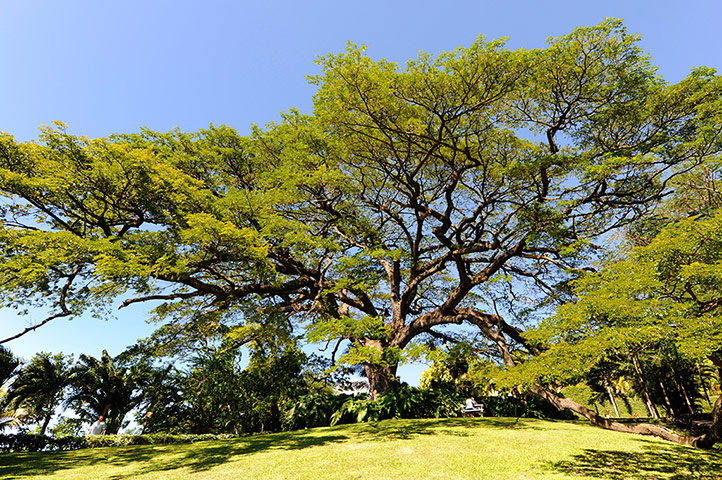
The saman, or rain, tree is native to Mexico's Yucatan Peninsula and was widely planted throughout America and the West Indies. The one shown here is a landmark of St Kitts, standing tall in the grounds of Romney Manor, which was once owned by Samuel Jefferson II – ancestor of President Thomas Jefferson. It is 350 years old, has a diameter of more than 24 feet and its branches cover about half an acre. Photograph: Alamy.com
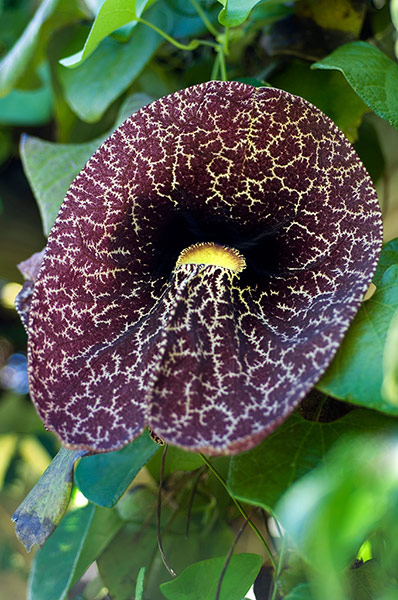
A prodigious grower, the evergreen calico vine is a frequent sight in the rainforests of St Kitts. It is also known as the Dutchman’s pipe on account of its strangely shaped, brownish-purple flowers. These have tubes lined with hairs and exude a faint odour of rotting meat – all the better for attracting and trapping insects. The hairs then wither and the insects are released, covered in pollen. Photograph: Alamy.com
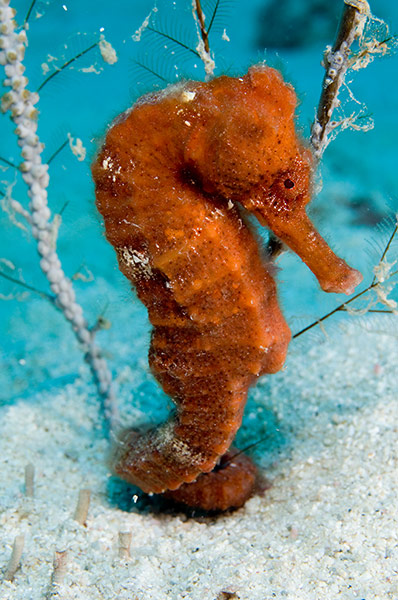
These rare, magical sea creatures have been seen in several dive sites around St Kitts – such as Monkey Reef, between St Kitts and Nevis, and the wreck of MV River Taw. But divers need to have sharp eyes: these tiny animals – often no longer than a thumb – camouflage themselves well. Although named for their (faint) equine appearance, they are in fact bony fish. Endearingly, it is the male that raises the young. Photograph: Jonathan Bird
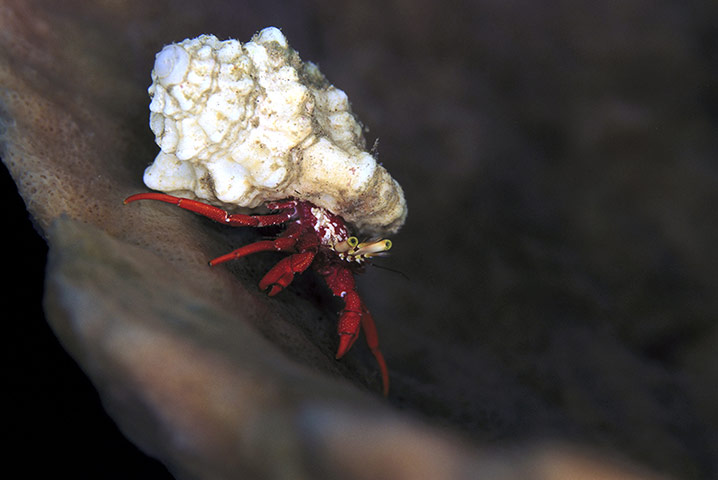
Red hermit crabs feed at night on Paradise Reef, in Old Road Bay. They appropriate shells made by other creatures and change their 'homes' as they grow bigger – so an empty shell in a reef will often trigger a property rush. Despite their name, they are more closely related to lobsters than to crabs. Photograph: Oxford Scientific
